Bottom Cropping Yeast Strains
Bottom cropping yeast strains are a delight to experiment with as they are newer to the world of brewing than ale strains. They also tend to produce a crisper, fresher flavor and texture profile for the warm weather beer drinker, so it would be fun to explore varieties during fall and winter in preparation for spring and summer.
But what is a bottom cropping yeast strain, anyway?
And what do you do with it?
Also read: Top Cropping Yeast Strains
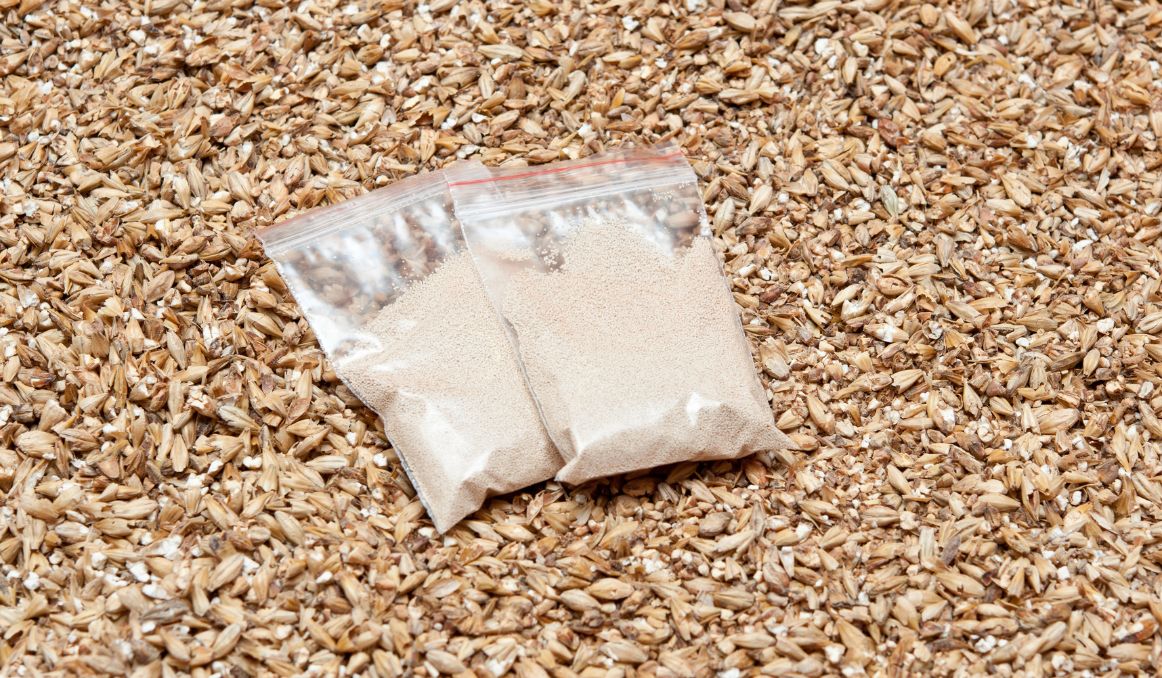
Bottom Cropping Yeast
Thousands of years of brewing had fixed firmly in place before bottom cropping yeast arrived on the scene, and for good reason.
The birth of brewing came about with the birth of cereal grains.
Grains are typically harvested in July and August.
So farmers who were looking at new and inventive ways to use their grains, would of course make cakes and breads, but also cereals and meads.
When you malt, grind, and boil a cereal grain, you can get a nice cereal to serve your family, or a hearty mead to go with a meal.
The boiling process would clean virtually any contaminant, of course, so you could ideally leave a large batch of cereal or mead out for days before having to worry about toxins.
Little did farmers know at the time that hungry yeast and bacteria were hovering invisibly in the atmosphere just waiting for the chance to ferment those cereals and meads into beer.
It was not long then before harvest season also meant brewing season as conditions were ripe for fermentation.
You see, ale yeast, or Saccharomyces cerevisiae, ferments in warm temperatures, anywhere from 68 degrees to 80 degrees Fahrenheit, perfect for a European summer or fall.
Thus, the process was very natural, from grain planting, to harvesting, to roasting, to boiling and steeping, and finally to fermenting, all under organic conditions that allowed everything to unfold in its own time.
Ale yeast stood the test of time and provided ales of all ranges for thousands of years before lager yeast had its moment in the spotlight.
And all because a group of Bavarian monks in the colder mountains decided to store their barrels of what they thought would be ale in deep, dark, cool caves.
Come to find out those barrels produced a dramatically different brew – lager.
It was the 1300s, and a whole new beer was introduced to the market.
As it turns out, lager yeast, now known as Saccharomyces pastorianus, not only ferments at a much lower temperatures, between 45 and 55 degrees Fahrenheit, but it also ferments “on the bottom,” which is why it is so often simply referred to as a bottom fermenting yeast, or a bottom cropping yeast.
All this means is that lager yeast flocculates on the bottom of the vessel, whereas ale yeast flocculates on the top of the vessel.
It can be harder to watch lager yeast flocculate at the bottom of the vessel, but you will still see the same active bubbling and frothing as well as krausening that you see with top fermenting yeast.
The difference really relates to the brewer’s ability to crop the yeast.
Cropping Yeast
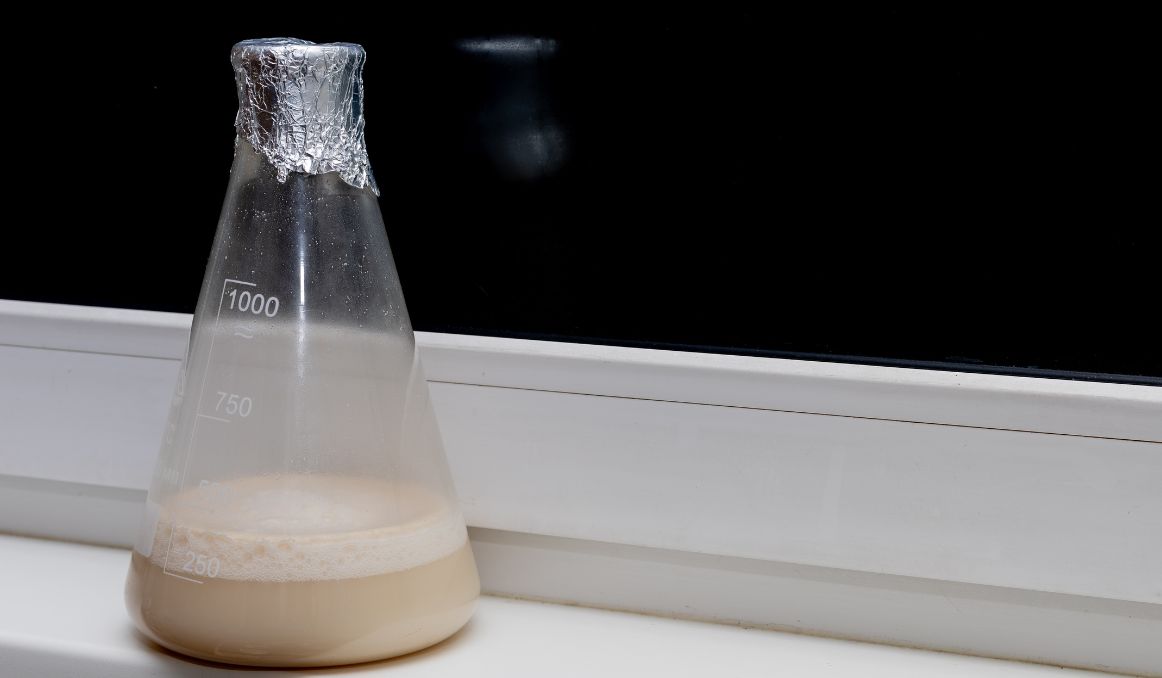
When we talk about cropping yeast, we typically mean to harvest the yeast from the fermentation vessel once fermentation is complete. We do this both at the end of primary fermentation, when we “rack” the beer, or transfer it to a secondary fermentation vessel, and at the end of secondary fermentation.
We want to harvest yeast from the brews we love because we can reuse it, and in fact the yeast is much healthier, more viable, and more vital after fermentation, during which the yeast was able to reproduce and create even more yeast.
It is, indeed, at the end of primary fermentation that you can expect your yeast to be healthiest as it is in its natural and preferred state.
In the old days, bottom fermenting yeast was harder to crop because, again, it was clumped together at the bottom of the fermentation vessel.
Brewers would have to carefully and gently pour the fresh beer into a new vessel while being sure to keep the yeast in that primary vessel for collection.
Today, with conical shaped fermentation vessels, where the trub, the slurry, and the yeast for cropping can be drained from the bottom of the vessel, it really makes no difference to the brewer which yeast they are working with in terms of cropping.
Best Bottom Cropping Yeast Strains
As of the latest publication, there are currently 86 lager yeast strains for brewers to experiment with.
These yeasts can be used to brew everything from lagers, of course, to pilsners, boks, Marzens, and dortmunders, all beers that tend to be “cleaner” to the taste as lager yeast strains tend to be highly flocculant, which means the yeast drops out of the beer and leaves it clearer than an ale would be after fermentation is complete.
Of the 86 lager yesat strains, 11 of those are dry and 75 are liquid, as is common with yeast. It is much easier to manufacture, store, and ship liquid yeast than it is to go through the vigorous dehydration process involved in turning liquid yeast to dry yeast.
Lager yeast strains go by a sort of catalog letter number organization.
- W-34/70 is good for a hoppy pilsner
- WY2278 is good for a malty, diacetyl pilsner
- Wyeast 2124 is a brewer’s favorite for strong fermentation
- WLP833 produces a classic Boston lager
- Then there’s German Bock 833, which is pretty self-explanatory
- WLP-940 is a super clean lager
And then of course you can peruse various website catalogs of yeast companies like Wyeast or Imperial Yeast, which will provide you with the names, numbers, and brief descriptions of the yeast they manufacture and will ship to you.
Take your time, experiment, especially since you are much more likely to have cooler temperatures to brew with during fall and winter, and then you can make your own lager yeast bank!
Cheers!
Yeast activity monitoring is essential for optimizing the process of yeast harvesting and repitching! If you’re interested in finding out how you can use our technology to control fermentation and monitor your yeast, save work hours and improve the cost-efficiency of your business, drop us a line at [email protected] or check out the product pages (for beer or wine):
- Oculyze BB 2.0 (Better Brewing) Yeast Cell Counter App + Hardware
- Oculyze FW (Fermentation Wine) Yeast Cell Counter App + Hardware
Also, you can now get access to a fully functional demo account to test your yeast via our Web App. Completely free of charge and with no commitment to purchase.
Sources: