Why Is my Yeast Clumping?
Such a good question, and so broad!
Why is my yeast clumping?
Every brewer has wondered about yeast clumping at some stage of brewing because all yeast clumps!
It just does. And your yeast may be clumping for an entirely different reason than your friend’s yeast.
So, let’s look at what might be happening, and how to fix it, if you even need to fix it.
What Is Yeast?
Let’s start with the basics – yeast is a single celled eukaryotic living organism.
One of the first life forms on earth, it takes care of all its needs and reproduction unilaterally, meaning it finds food, eats it, produces waste, and reproduces all as a single cell.
Now, its food is fermentable sugars, preferably glucose and fructose. It can consume sucrose, but the process is much more challenging.
Its waste is alcohol and carbon dioxide, so that’s where fermentation comes in. It consumes the sugars in your wort and expels alcohol and carbon dioxide, turning what is essentially grain tea into beer!
And when it reproduces, it does so asexually, by simply producing a daughter cell that protrudes from its own body, which then grows and eventually splits off from the mother cell.
Fascinating, right?
So, what’s all the clumping about?
Why Yeast Clumps in General
It seems that some yeast clump as a way of surviving in harsh conditions.
Those mother cells produce daughter cells that never split off. The daughter cells do the same, and so on until you have a mass clumping of yeast cells.
This clumping typically occurs in nature as a way for yeast to consume hard to digest food, like sucrose, and then all the yeast cells benefit.
Scientists have speculated that this clumping may have been an early indication of evolution, and how single celled species became multicellular species.
Cells tend to work better and more efficiently when they work together.
Why Yeast May Be Clumping in Your Wort
We see a similar thing happen when yeast clumps in wort.
Technically, most yeast does not clump until the wort becomes beer. We call this clumping “flocculating.”
As part of the brewing process, yeast, once it has entered the wort, will get very busy consuming all the fermentable sugars in the wort.
Typically, once it has consumed all the sugar and produced all the alcohol and carbon dioxide, it will flocculate. That is, the yeast will reach out to each other and form connections.
You, the brewer, will see this result as a large clump of yeast either on the top of your vessel if you have ale yeast (Saccharomyces cerevisiae), or on the bottom of your vessel if you have lager yeast (Saccharomyces pastorianus).
This clumping is reversible, so yeast can be harvested from the brew in its clumped form, rinsed or washed, and pitched multiple times.
In this case, there is nothing for the brewer to do. It is perfectly normal, and you can simply harvest your yeast, rinse it, and save it for another day.
Rehydrate Dry Yeast
Sometimes, if you are working with dry active yeast, and you pitch it dry right into your wort, you may notice clumping.
This clumping is different from what is described above.
The dry active yeast has been dehydrated and simply has not been awakened yet, so it will clump until the wort wakes it up enough to get started doing its fermentation work.
You can help along already pitched dry yeast by agitating your wort through stirring it or recirculating it, or if you have not pitched it yet, waking it up first.
To wake up your yeast before pitching, you will simply need to rehydrate it by putting it in a cup of water with a teaspoon of sugar and stirring the mixture.
Within a half hour, you will notice bubbling and activating. Your yeast is awake, and you can pitch it now without fear of dry yeast clumping.
High Flocculant Yeast
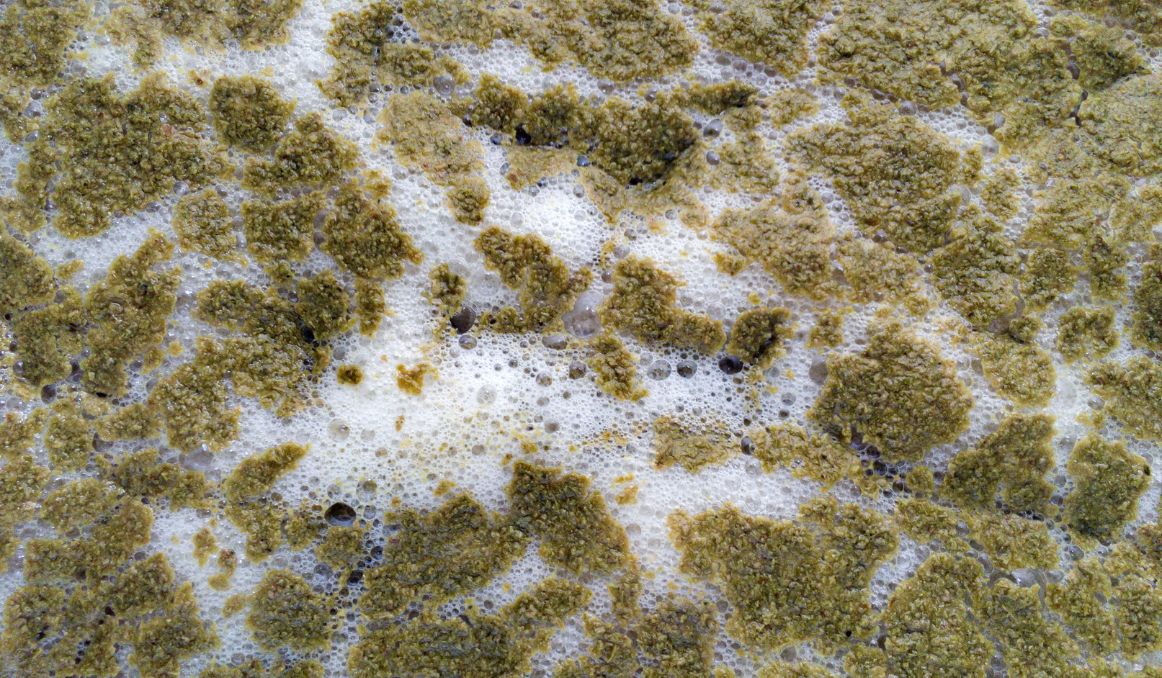
Be mindful that some strains of yeast are naturally highly flocculant and will in fact clump quickly, in just a matter of days, leaving much of your fermentable sugars in the beer, which will result in a sweeter beer with less alcohol.
There are a few factors that contribute to high flocculation as well.
Watch your temperature, as higher temperatures send yeast into overdrive. They may get stressed out, overwhelmed from consuming too fast, and flocculate.
Excessive fermentable sugars with less yeast may also contribute to that same stress and overwhelm.
Prepare yourself to either pitch more yeast or recirculate your beer in order to break up already flocculated yeast and resolve your clumping issue.
Either way, clumping yeast is not usually a make it or break it problem. It is simply a matter of figuring out what is happening with your specific yeast in your specific brew.
As usual, it is about experimenting and seeing what works for you.
Cheers!
Are you still pitching fresh yeast every time? By reusing your yeast, you can save up to hundreds of thousands of dollars per year on just yeast alone!
Join the hundreds of brewers from all around the world using the Smartest Automated Yeast Cell Counter! Request a Free Demo Account today and experience firsthand how Oculyze can take your brewery to the next level!
Sources:
- https://www.discovermagazine.com/planet-earth/yeast-show-humans-why-its-better-to-be-a-clump
- https://www.homebrewtalk.com/threads/yeast-clumped-when-pitched.166834/
- https://www.enzymeinnovation.com/flocculation-attenuation-explained/
Stay on top on important fermentation insights – subscribe to our monthly newsletter and receive a hand-picked selection of our most relevant articles straight to your inbox.
Never miss a beat and get real time updates with a new article each workday by subscribing our social media channels.
Instagram | Facebook | Twitter | YouTube