Which Is the Darkest Colored Beer?
Beer has an entire range of colors that starts at a pale straw yellow and works all the way up to black. Brewers and drinkers alike often wonder at what determines the color of beer, and of course wonder which is the darkest colored beer, and which is the lightest.
It helps to understand both the ingredients and the brewing process.
What Colors Beer?
Many factors contribute to the color of beer, the most important of which is the grain. But so many things happen to the grain that makes beer, with each step being a critical one, that any slight change has the potential to make beer either significantly darker or much lighter.
Grain
Beer can be brewed from virtually any grain, and many, many people don’t realize this fact. While the classic grain has been and remains malted barley, beer can be made from wheat, oats, rice, and even quinoa, to name just a few.
And each of those grains comes in its own range of colors, all of which will affect the end result color of the beer.
Roast
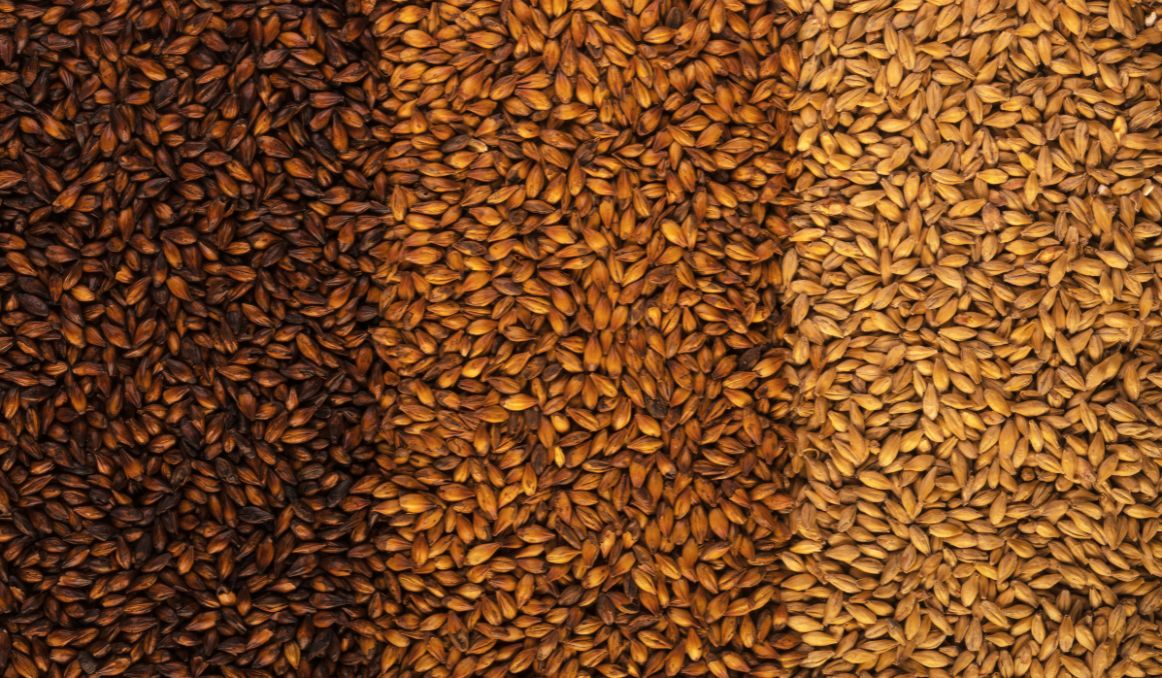
However, much more important than the grain is how the grain is roasted. Of course virtually all grains are roasted in order to unlock the sugars hidden inside of the carbohydrates for maximum fermentation. Yeast loves highly fermentable sugars, and malted grains fit the bill.
The longer the roast, the darker the grain will be, and of course the darker the grain, the darker the beer.
Just look at an image of barley next to one of roasted barley. Huge difference.
And if you’ve ever held rolled oats in your hand, it would seem impossible that those pale, almost white grains could contribute to those dark, almost black oatmeal stouts.
The roast will also have a tremendous impact on the flavor and texture of the beer, which is why many correctly assume that the color of a beer gives the drinker hints as to what flavor, aroma, and texture to expect. Though of course there are always exceptions to this general rule.
Time
Once the roasting, or malting, process is complete, the brewer will then decide how long to mash in the grain. This step is akin to that of steeping tea. The grain has been ground and boiled; now it will sit in its liquid for a predetermined amount of time.
As you might have guessed, the longer a grain sits in the liquid, the darker and richer in color that liquid will be.
Again, the longer a grain steeps, in addition to whether the brewer raises and lowers the temperature repeatedly, the stronger the end resulting beer will be in flavor as well. These darker, stronger beers also tend to be more bitter.
No surprise there.
Yeast
The next step in brewing is the addition of yeast, and it is worth mentioning that yeast can impact color. Some strains of yeast will turn a beer darker, and many will create a more hazy effect, which will impact color.
Though yeast is not a strong determinant of beer color, it does contribute, so be mindful of this reality when choosing your strain.
Filtration
Finally, the filtration process can greatly affect beer color, especially if done repeatedly or excessively. Brewers will typically filter beer to get rid of any potential unwanted or undesired off flavors, and high filtration will pull out molecules that contribute to color.
So expect a highly filtered beer to be lighter than it would be otherwise, regardless of the beer.
What Does Color in Beer Mean?
Now you know what makes a beer darker or lighter in color, but what does that color actually mean?
In general, lighter beers – pilsners and witbiers – tend to be crisp and refreshing, perfect for a summer day on the patio. These beers often have hints of wheat, bread, toast, and citrus to accent the crisp flavor.
Darker beers are more caramel flavored, with notes of chocolate and coffee that all come from that darker roasting process.
These dark brown and black beers are your porters and stouts.
Then you have the medium colored beers that can range from caramel colored to reddish. IPAs are a great example. They tend to be malty and hoppy, highlighting rather than masking bitterness.
What the color of beer will not tell you is how strong a beer is in terms of alcohol content. You can find really light beers with super high ABV and vice versa.
Darkest Beers
Today, the darkest beers are considered black. On the market, those beers are imperial stouts and porters.
On many lists of favorite dark beers are:
- Deschutes Black Butte Beer, with 5% ABV and hints of coffee, chocolate, and dried fruit.
- Alaskan Smoked Porter, at 6.5% ABV and tastes of roasted malt and smoked meat.
- Jack Abby’s Smoke and Dagger, at 5.8% ABV is a black lager, interestingly enough, that tastes of coffee and smoke.
And there are so many more. These three are a great place to start experiencing the wide range of dark beers, across fermentation a grain styles.
Next, you can begin planning your own dark beer.
Experiment with grain, with your roast, with your mash in, and even with your yeast, and then you will put the craft in your very own craft dark beer.
Cheers!
Passionate about the beer and/or wine making process? So are we! If you’re interested in finding out how you can use our technology to control fermentation and monitor your yeast, save work hours and improve the cost-efficiency of your business, drop us a line at [email protected] or check out our product pages:
- Oculyze BB 2.0 (Better Brewing) Yeast Cell Counter App + Hardware
- Oculyze FW (Fermentation Wine) Yeast Cell Counter App + Hardware
Also, you can now get access to a fully functional demo account to test your yeast via our Web App. Completely free of charge and with no commitment to purchase.
Sources: