Which Beer Has the Most Yeast?
Most of our readers already know that yeast plays a critical role in the fermentation of beer. In short, you cannot have been without yeast. But what happens when you use more yeast? Or when you leave yeast in the beer for longer? Yeast does not just ferment to create alcohol and carbon dioxide; it creates an entirely different product, and that end product changes dramatically based on the level of yeast included in the beer. So, which beer has the most yeast? Well, it depends.
 The Role of Yeast in Beer
First, let’s talk about the role of yeast in beer. As noted, it is more than just a creator of alcohol. To ferment means to transform one product into another product through a chemical process. To a great degree, brewers have very little control over what yeast does other than which ingredients to feed it and for how long to leave it.
Brewers will choose a grain, toast it and grind it, and then boil it in water to extract all the nutrients and sugars into the water. The resulting liquid, the wort, will then cool down and naturally attract yeast. For millennia, that is how brewing was performed; the brewer simply waited for nature to take its course.
Today, brewers can choose their strain of yeast from among hundreds of commercialized ale and lager strains of Saccharomyces cerevisiae, or they can opt for a wild yeast and allow nature to take its course as their ancestors did.
Still, with few exceptions, brewers must then allow yeast to do its thing.
Adding more sugar will give yeast more food to consume and convert to higher alcohol levels. Too much sugar will overwhelm the yeast and cause it to die off. Adding alcohol will stop the yeast from doing their job hold alcohol levels where they stand in that moment. Toasting the grain more or less will increase or decrease fermentable sugars. Depriving the yeast of oxygen will force it into alcoholic fermentation.
These are all tips and tricks brewers can work with to get yeast to perform differently.
But what does adding more yeast do?
What High Yeast Does in Beer
Adding more yeast to beer will create more alcohol and more carbon dioxide. A beer fermented with a higher level of yeast and more sugar to match it will produce a beer with a higher ABV. Because carbonation tends to die off over time if not constantly kept in an air tight container, beer fermented with high levels of yeast may or may not have a lot of foam and bubbles. Brewers can of course decide to bottle condition beer to add extra carbonation.
Bottle Conditioning
Bottle conditioning brings up an entirely separate conversation. Many beers that are bottled are “conditioned” to add more carbonation to the brew right before the lid is sealed. Brewers will add a bit of yeast and sugar to the brew right before bottling and then seal the bottle. This process adds in another layer of fermentation, putting the yeast and sugar to work fermenting and creating more carbonation. Because this mixture is typically combined with water, it does not usually raise the ABV of the beer by enough to matter.
This process also brings up the question of whether when we ask about high yeast beers we are talking about beer that is fermented with high levels of yeast or beer that has more yeast left in brew after fermentation is done.
Hefeweizen with High Yeast
This distinction is an important one as you can have a beer with yeast suspended in it without that beer having particularly high levels of alcohol. Likewise, you can have a beer with a high ABV that does not have any yeast suspended in the brew.
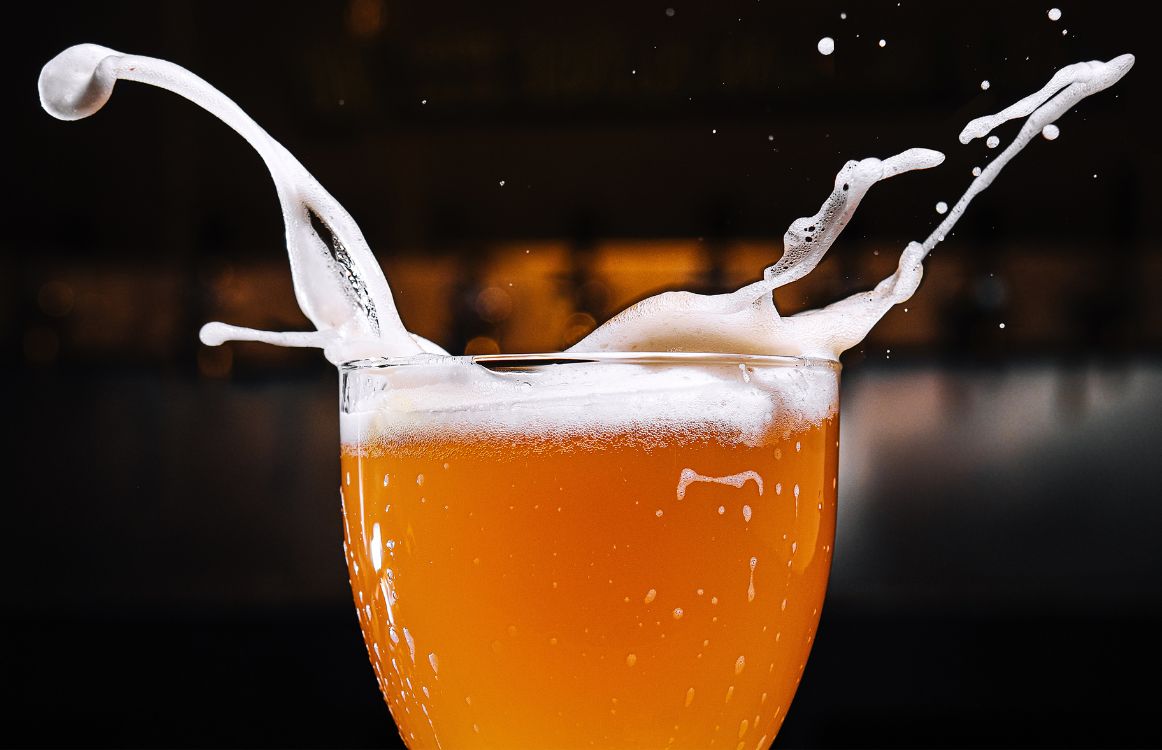
Hefeweizen is a classic example of beer that is not especially high in alcohol, typically coming in between 4% and 6%, but it has perhaps the highest levels of yeast suspended in the beer.
Hefes are known for their cloudy, hazy appearance and their nice thick head. These characteristics are largely due to the fact that Hefe brewers leave the yeast in the beer to continue fermenting as long as the yeast cells can ferment. Ultimately, the yeast will lie dormant and suspend in the beer, forming tiny clumps with the proteins in beer. Because Hefeweizen is made with top fermenting ale yeast, it will hang from the top and hang in the beer.
The yeast in Hefes is not only abundant, it is also live and active, rich in nutrients like the probiotics you get in yogurt.
In terms of yeast still in beer, Hefeweizen and other Bavarian wheat beers are clear winners. Lovers of this beer are often attracted specifically to its yeasty characteristics, often hinting at bread and toast. Hefeweizen itself is known for the banana and clove flavors that come from the phenols created by the Hefeweizen yeast strain.
Other Beers with High Yeast
At the same time, beers with high levels of alcohol, like IPAs and even some porters and stouts are made as strong as they are because of higher levels of yeast. Brewers will toast the grains longer in porters and stouts, resulting in higher sugar levels, and then add more yeast, the combination of which will create a beer with a higher alcohol level. With IPAs, because the brewer adds more hops for more bitterness, a balance is required – more sugar. Thus, brewers of IPAs will either add sugar or toast the grains more, creating more sugar content. Then, the yeast has more to feed on, which produces a higher alcohol content.
In the end, it comes down to whether you are searching for a beer with yeast still in the brew – in which case you should seek out wheat beers like Hefeweizen – or beers fermented with more yeast – in which case you should look for porters, stouts, and IPAs.
Cheers!
Are you still pitching fresh yeast every time? By reusing your yeast, you can save up to hundreds of thousands of dollars per year on just yeast alone!
Join the hundreds of brewers from all around the world using the Smartest Automated Yeast Cell Counter! Request a Free Demo Account today and experience firsthand how Oculyze can take your brewery to the next level!
Sources:
- https://www.upthirst.com/what-type-of-beer-has-the-most-yeast-in-it/
- https://blacktailnyc.com/what-beer-has-the-most-yeast/
- https://tasteebrew.com/the-most-yeast-beers/
Stay on top on important fermentation insights – subscribe to our monthly newsletter and receive a hand-picked selection of our most relevant articles straight to your inbox.
Never miss a beat and get real time updates with a new article each workday by subscribing our social media channels.
Instagram | Facebook | Twitter | YouTube