How Long to Mash Beer
The mash in process is critical to the brewing process, so it is no wonder there is confusion as to how long to mash beer. Too long may produce an overly bitter product. Too little may produce too many starches and not enough sugars. The questions surrounding mashing are many, and they deserve to be addressed.
What Is Mashing in Beer?
The mash process in brewing comes right after the kilning and milling processes.
To make beer, brewers first select their grains based on the flavors and aromas they hope for, as well as the level of fermentable sugars they will provide and the number of proteins they will contribute to the beer.
Next, brewers will toast the grains to adjust flavor levels.
Lightly toasted grains will have a more earthy, natural, light flavor, and dark roasts will produce a richer, maltier, nuttier flavor, even producing notes of coffee and vanilla.
Also, lightly toasted grains preserve the naturally occurring amylase enzyme, which converts your starches to sugars, and the more darkly roasted the grain is, the more that enzyme is destroyed.
All of this information matters because it relates to the time of mash in.
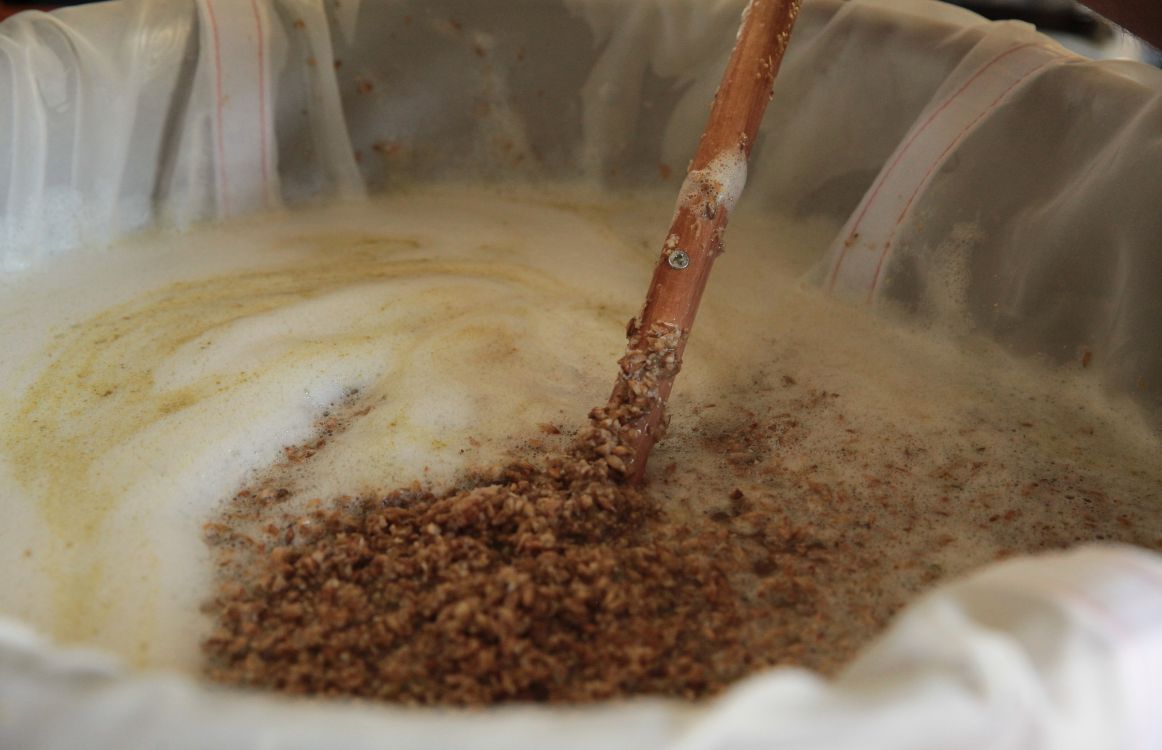
Once you have chosen your grain and chosen your roasting level, you will steep the grain in hot water, usually around 160 degrees Fahrenheit. This step is called the mash in because you are literally mashing your grain into hot water.
The amount of time you mash in, or leave your grain in the hot water, is determined by the grain and the roast. Darker roasts may take longer as they have fewer of those amylase enzymes, and lighter roasts may take less time as they have more amylase enzymes.
Why Do We Mash?
The goal of the mash is to get all of the starches and sugars from the grains into the water and convert all, or as many as possible, of those starches into sugars. During the mash, the nutrients from the grains are all released into the water, and the amylase enzymes in the proteins start breaking up the non fermentable sugars, or starches, into fermentable sugars, so that the yeast can consume them and create alcohol and carbon dioxide.
Without the mash, the yeast would have much less to work with and we would end up with a much lower alcohol content. Think of the alcohol content of bread, which is often around 1%.
Have you optimized grain sugar extraction? Test it out with our handy Mash Efficiency Calculator!
What Is Lautering?
After the mash in, we have a mash out, which is when we filter all the grain from the wort, reserving the wort to be fermented into beer. The hotter the liquid, the easier it is to separate the liquids from the solids.
During, or directly after, the mash out, the lautering process begins, which is when water is sprayed over the grain to completely rinse off any residual starches or sugars from the surface of the grains.
This residual runoff is then either added to the wort or kept separate to form its own lighter, lower alcohol beer.
Also read: What is Lautering in Beer Production?
Why Boil after Mash?
Finally, after the mash out and lautering, the wort is boiled to remove any toxins or contaminants. The boil can be quick and will also offer another level of filtration and clarification, converting solid molecules into liquids or binding proteins to larger molecules that can be filtered out.
After the boil, the wort is cooled down and yeast is added.
Fermentation can begin.
How Long to Mash Beer
The answer to the question of exactly how long to mash beer is a tricky one.
In general, all malts, regardless of the grain or the level of the roast, can be mashed for 60 minutes to ensure fully conversion of starches to sugars.
However, you can experiment with longer and shorter mashes along the way.
You can also perform an iodine test to be sure.
To perform this test, you can take out a bit of the wort and place it in a cup. Add a drop of iodine to the cup.
If the liquid changes color to purple or black, you know you still have starches in your wort. If there is no color change, your starches have all been converted to fermentable sugars, and your wort is ready to mash out.
Again, you may or may not want to leave some of the starches in your beer. It all has to do with experimentation with flavors, aromas, mouthfeels, and more. But these steps and processes are the basics you can start with.
Cheers!
Are you still pitching fresh yeast every time? By reusing your yeast, you can save up to hundreds of thousands of dollars per year on just yeast alone!
Join the hundreds of brewers from all around the world using the Smartest Automated Yeast Cell Counter! Request a Free Demo Account today and experience firsthand how Oculyze can take your brewery to the next level!
Sources:
- https://www.allthingstreasurecoast.com/Beer/Beer/p-Brewing-Process.html
- https://www.thekitchn.com/brew-day-hour-1-the-mash-the-kitchns-beer-school-2015-217252
- https://beerandgardeningjournal.com/mash-how-long/
Stay on top on important fermentation insights – subscribe to our monthly newsletter and receive a hand-picked selection of our most relevant articles straight to your inbox.
Never miss a beat and get real time updates with a new article each workday by subscribing our social media channels.
Instagram | Facebook | Twitter | YouTube