Does All Beer Have Yeast?
So, you’ve been wondering, “does all beer have yeast?”
The simple answer to your question is yes. All beer has yeast.
Let’s look at why.
What Is Beer?
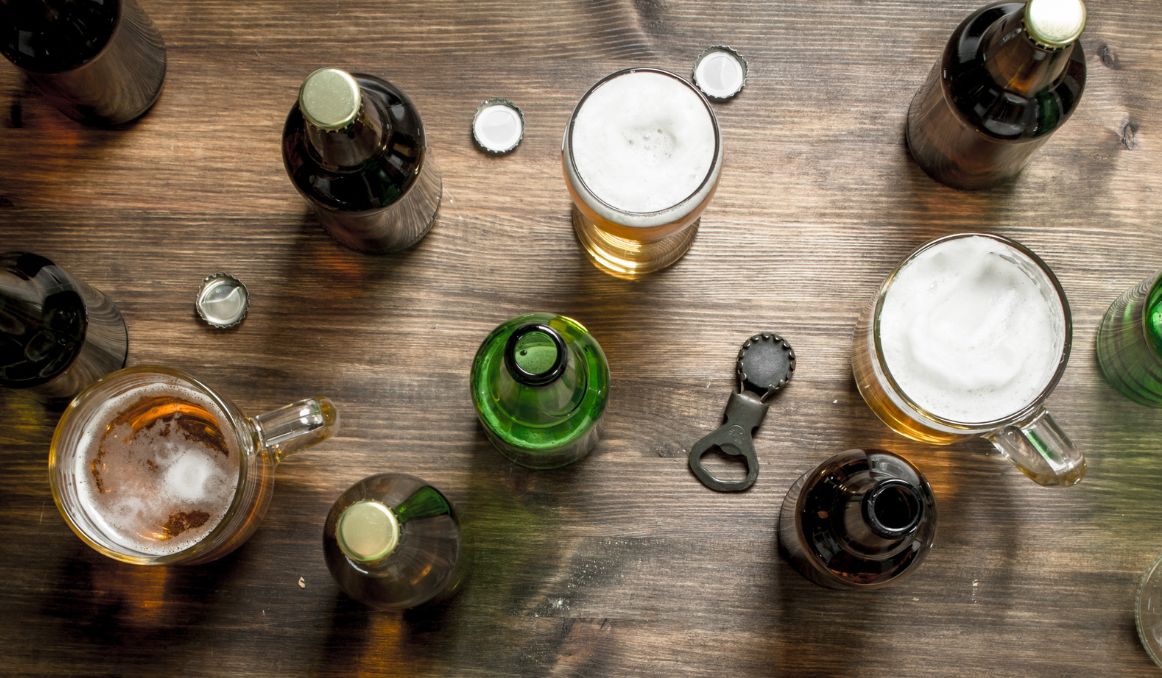
Beer is one of the earliest alcoholic beverages known to humans. It is, essentially, fermented grain water.
Ten thousand years ago, long before any of us knew what we were doing with food beyond hunting and gathering and moving around, we decided to settle down and stop chasing our food.
This period in human history is referred to as the first Agricultural Revolution.
(The second took place thousands of years later, only a few hundred years ago when we started using industrialized machinery to farm.)
During the Agricultural Revolution, we began growing crops, domesticating livestock, and building cities.
Human history has shown that once we have our basic needs met – food, shelter, a water source – we tend to make alcohol.
Wine was the first alcohol to hit the scene for many societies as it was the easiest to produce. Simply crush grapes and allow them a few days, or weeks, to ferment.
Beer was a bit more complicated. But only a bit.
You see, all those ancient grains we were growing – oats, wheat, barley – were perfect for mashing down and making into meals, like today’s oatmeal or the cream of wheat of decades past.
Once we crushed and boiled grains, all we had to do was allow the water in which those grains were boiled to cool down and ferment, and now we have beer!
It really was that simple.
But the essential ingredient has long been one that we did not even understand – yeast.
What Is Yeast?
The theory goes that even before we were human, while we were still in our ape ancestor form, we were making wine.
Even today, apes in the wild will allow fruit to ferment before eating it, clearly knowing they will get an alcoholic buzz from it.
Thus, we were not actually “making” wine for a long time. We were waiting for wine to make itself.
We were waiting for that magical process to take place – fermentation.
And there is only one ingredient on all of the planet that will instigate alcoholic fermentation – yeast.
Yeast is a single celled, eukaryotic living organism that has been around for at least as long as there have been fermentable sugar sources like fruits and starchy vegetables.
Invisible to the eye but virtually everywhere on the planet that provides a warm, moist, sugary environment, yeast is constantly on the hunt for its energy source – sugar.
When it finds sugar, it consumes it and then produces alcohol and carbon dioxide as a waste product.
Lucky for us.
Why Yeast Is Essential to Beer
Thus, when humans crush grapes and leave the grape juice to sit out, the yeast gets into the grapes and gets right to work.
The same goes for beer.
When humans began crushing grains, boiling them, straining out the grains, and leaving the “wort” out to sit, wild, local yeasts hovering nearby would descend upon the wort, consume all the sugary goodness inside, and produce the alcohol and carbon dioxide necessary to beer.
Without yeast, beer is basically just grain water, or grain tea. Think about it, to make tea, you boil water and pour it over leaves or herbs. Or you boil roots or dried herbs inside the water.
Sometimes you add honey.
Then you can let it sit for days. Eventually, that tea will turn alcoholic, thanks to local yeast.
Sometimes, this question, “does all beer have yeast,” is actually asking about added yeast.
The question, stated in another way, then, could be asked, “do you have to add yeast to make beer?” And the answer to that question is no.
You do not have to add commercially produced yeast to your wort to make beer.
Indeed, for thousands of years, our ancestors trusted in the wild, local yeasts to “work their magic,” and produce beer for them.
And brewers today could do the same thing.
You could honestly go through all the normal processes, choosing your ancient grain, deciding whether to toast it, crushing the grain, boiling it in water, straining out the grain and then… leaving it.
Brewers who want to follow the old ways could ferment, at least initially, in an open-air vessel, waiting for the local yeasts to get to work.
Then, once you notice fermentation has begun, you could take a gravity reading and close your vessel up, trusting you have local yeast and enough oxygen to complete fermentation and avoiding excess oxidation of your wort, which could create off flavors.
If you are interested in a sort of reclamation of ancient brewing practices, this approach would certainly be one to take.
Beer without Yeast
Of course, you can make beer without yeast, but you really cannot call it beer.
It would be, as stated above, grain water, or grain tea. You cannot even justifiably call it non-alcoholic beer, though some do.
Beer without yeast will not have the same classic characteristics, flavors, aromas, and mouthfeel as beer made with yeast.
You will find it to be thin and lacking in the richness and fullness of beer.
That is not to say some do not try to make beer without yeast, like in the Middle East where, in some regions, alcohol is strictly forbidden for religious reasons.
But in general, most non-alcoholic beers are made with yeast, alcohol is produced, and then the majority of the alcohol is filtered out either through some form of reverse osmosis, which pushes the beverage through a fine mesh filter that will only allow alcohol to be strained out, or through heating the beer up so the alcohol evaporates.
The preferred method for beer lovers is the filtration process as it retains much of the beer character, though it will leave a small percentage of alcohol, usually less than .5% ABV, behind.
So, again, the answer is yes, all true beer has yeast, but what yeast, how the yeast is used, and what is done with the beer afterwards, are all up to the brewer.
Cheers!
Are you still pitching fresh yeast every time? By reusing your yeast, you can save up to hundreds of thousands of dollars per year on just yeast alone!
Join the hundreds of brewers from all around the world using the Smartest Automated Yeast Cell Counter! Request a Free Demo Account today and experience firsthand how Oculyze can take your brewery to the next level!
Stay on top on important fermentation insights – subscribe to our monthly newsletter and receive a hand-picked selection of our most relevant articles straight to your inbox.
Never miss a beat and get real time updates with a new article each workday by subscribing our social media channels.
Instagram | Facebook | Twitter | YouTube