Ways to Describe Wine like a Pro
If you’re relatively new to the wine world, or at least to the selling of wine, you may be seeking ways to describe wine like a pro. You’re just mastering the art of making the wine. Now you want to know how to talk about it.
It helps to first reflect on what the actual winemaking process looks like when you undertake it, for purposes of explanation.
Then, think about the various elements, or characteristics, that make up that wine.
Finally, you can start employing the lingo like a true connoisseur.
How Wine Is Made
At face value, it may seem like wine is a simple matter of crushing grapes and fermenting the juice.
But so much more goes into winemaking.
Before anything else, a winemaker must think of the choice of grape.
In general, wine grapes are much sweeter than table grapes, selected primarily for the extra fermentable sugars in the plump fruit. But even then, there are more than 10,000 wine grapes to choose from, each of which has its own distinct nature.
And any winemaker realizes that in addition to the choice of grape, they are also choosing soil quality, environment, and temperature when it comes to the way the grape grows. Each of these factors contributes to the flavor, aroma, and even mouthfeel of the grape and of the wine.
Then decisions have to be made about the crushing of the grapes, whether the seeds, stems, and skins will be allowed to sit in the fruit juice, and for how long. Each of these decisions will contribute to the end resulting wine.
Next, the yeast must be chosen for fermentation. Whether the yeast is local, whether it has a high alcohol tolerance, and whether it is combined with another yeast or even a bacteria all have dramatic effects on the outcome.
Finally, the actual fermentation process must be considered. How long will primary fermentation last? How many times will the wine maker rack the wine? And how long will secondary fermentation last, if it is included at all? All of these decisions will influence the wine ultimately.
Five Characteristics of Wine
When it comes to describing wine, five primary characteristics are included in the language we use. We categorize wine into five distinct spaces.
Sweetness
Back to that choice of grape. We discuss the sweetness of wine in terms of how much residual sugar there is in the wine after the fermentable sugars have been converted to alcohol.
Sweetness is easy to talk about in terms of wine because it is something we are all looking for when we drink a glass of wine. The first thing most of us think of when we take our first step is “how sweet is this?”
Acidity
Acidity in wine is what balances or offsets the sweetness. We can sense high acid levels, or how tart or sour the wine is, the less ripe a grape is. As the grape gets riper, the less acid we will sense. This is where environment comes into play, as grapes that grow in cooler climates tend to have more acid because they don’t have access to the same warmth and sunshine sweeter grapes need to get high sugar levels.
When we talk about acid and wine, we refer to the acids that come from grapes – tartaric, malic, and citric acid. Remember the lower the pH level, the higher the acid level. Wine tends to sit between 2.5 and 4.5 pH on the scale.
Tannin
We talk about tannins in wine as the effects of the grape’s skin, stems, and seeds on the wine. Tannins are natural compounds, also known as polyphenols, that are released into the wine the longer the crushed grapes sit in the juice.
Typically, white wine does not sit with its skin, stems, and seeds, so we usually only talk about tannins in terms of red wine. Sometimes, however, white wine will age in oak barrels, which also give off tannins, so they can be present there, though in much smaller quantities.
Tannins are typically described in terms of the texture you feel on your tongue. The higher the level of tannin, the drier your tongue would feel. If a wine dries out your mouth, you would refer to it as “tannic.”
Alcohol
Of course, we have to discuss alcohol when it comes to wine, but we usually don’t do it in terms of flavor or texture. You don’t often “taste” alcohol in wine. Most of the time, you can’t even detect a higher alcohol content in wine.
During fermentation, the sugars and grapes are converted to ethanol, which we refer to as alcohol, and typically the longer a wine is fermented, the higher the alcohol percentage.
While we can’t often taste higher alcohol levels, our nose will detect alcohol in wine.
Body
Finally, sweetness, acidity, tannin, and alcohol all come together to give us the body of wine. In wine, we talk about the body being either light, full, or medium.
Light bodied wines tend to be more acidic with less alcohol, tannin, and sweetness. Full-bodied wines would then have the opposite effect.
Language for Describing Wine like a Pro
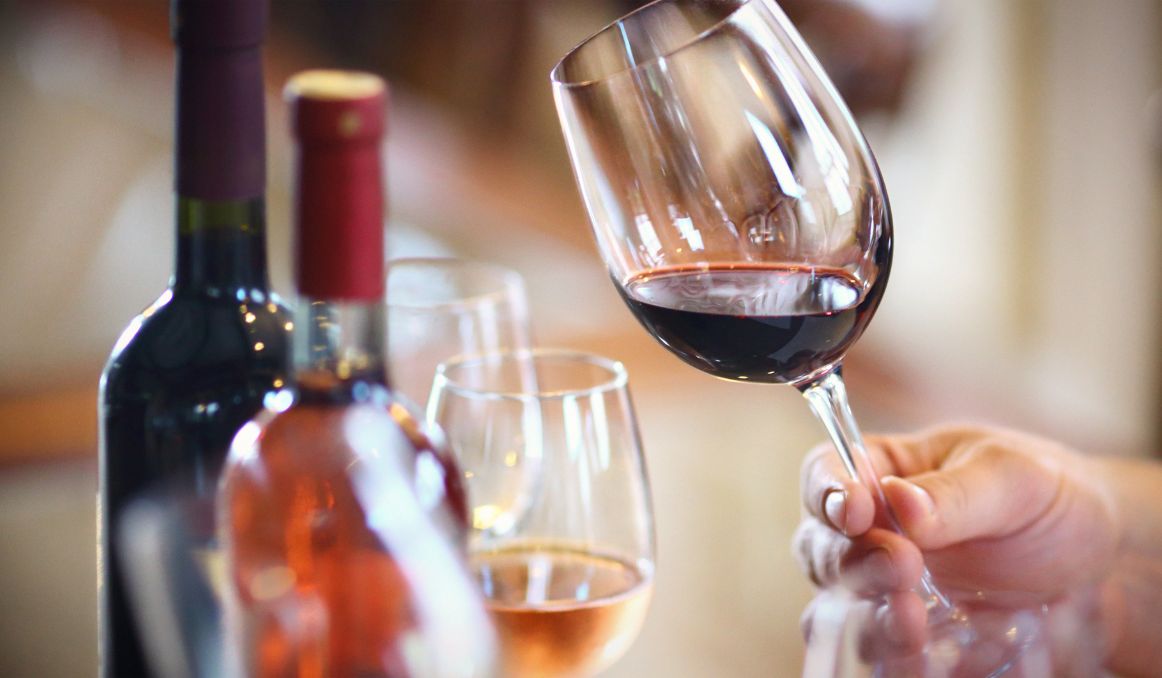
Now for a glossary of terms you can use to describe the five characteristics above.
Of course, we have already discussed sweetness, acidity, tannin, alcohol, and body.
Angular describes a wine high in acid that hits you with high impact.
Aroma refers to the smells of wine, including fruit, herbs, flowers, earth, chocolate, grass, mocha, and tobacco.
Balance deals with the interplay of fruit, alcohol, and acid.
Complex describes diverse wine that seems to change flavor as you drink it.
Earthy is the word used to describe a clean quality.
Elegant is for understated wines.
Finish refers to aftertaste.
The legs of a wine are the streaks left behind on the side of the glass when you swirl your wine.
Minerality is the word we use to describe non-fruity, non-herbal, and non-spiced wines.
We use the word oaky when discussing wines that have been aged in barrels.
And we use zesty to describe livelier wines with crisper qualities, typically with citrus and acid notes.
Cheers!
Passionate about the wine and/or beer making process? So are we! If you’re interested in finding out how you can use our technology to control fermentation and monitor your yeast, save work hours and improve the cost-efficiency of your business, drop us a line at [email protected] or check out our product pages:
- Oculyze FW (Fermentation Wine) Yeast Cell Counter App + Hardware
- Oculyze BB 2.0 (Better Brewing) Yeast Cell Counter App + Hardware
Also, you can now get access to a fully functional demo account to test your yeast via our Web App. Completely free of charge and with no commitment to purchase.
Stay on top on important fermentation insights – subscribe to our monthly newsletter and receive a hand-picked selection of our most relevant articles straight to your inbox.
Never miss a beat and get real time updates with a new article each workday by subscribing our social media channels.
Instagram | Facebook | Twitter | YouTube