Yeast Staining: Procedure
It is true that not everyone has a lab process in place at their brewery. Indeed, many owners of small breweries will argue that they have a clean space, that they manage their sanitation levels and that they keep strict cleanliness procedures to ensure no contamination of yeast or other product stored. These statements are likely true. No one wants to have to dump beer.
Most brewers are careful and mindful of their practices. It is common knowledge in craft brewing that consistency is key. Your clientele expects your beer to taste the same every single time with little to no variation in color, flavor, and texture. A thoroughly consistent and repetitious process is critical to meeting this expectation, including sanitation.
What many do not realize, however, or just cannot bring themselves to admit, is that microbes are everywhere at all times. It is not a matter of whether your product has been exposed to them, it is a matter of when and how much.
It is also a reality every brewer must face that you do not just need lab equipment to measure for contamination, but also for yeast concentration and viability. Can your yeast even perform? You will want the answer to that question long before you find your beer with stuck or sluggish fermentation.
And once you do invest in some equipment to help you monitor your fermentation, the next question you’ll want answers to will most likely be: which yeast staining procedure is best?
The Power of Yeast
First, let’s talk about what brewer’s yeast does, and why it is so powerful for the creation of beer. Typically, when we think of brewer’s yeast, we understand only on the surface level that yeast is added to the wort in order to convert the sugar to alcohol. Yeast also carbonates the beer. What we are left with is a crisp and delicious alcoholic beverage. The end. Right?
Wrong.
Yeast does so much more than just make alcohol out of sugar.
Yeast Eliminates Oxygen
As the yeast is eating up all the sugar in your wort, it is also consuming all of the oxygen in your fermentation tank, which effectively eliminates opportunities for contamination by bacteria, as bacteria needs oxygen to survive. With strong, viable yeast, you are increasing your chances of an uncontaminated batch of beer just by the fact that the yeast is doing its job.
Low pH Fights Bacteria
This same process of eliminating oxygen also lowers the pH levels in your batch. Low pH levels mean more acid, and most bacteria prefer a higher pH level, less acid, to survive. Thus, just by benefit of lowering the pH in the batch, yeast kills bacteria.
Alcohol inhibits Bacteria Growth
Further, as the yeast converts the sugar to alcohol, bacteria is once more inhibited by that production as alcohol prevents bacteria growth and tends to destroy it on contact.
So, you see, yeast is an incredibly powerful additive to the production of beer, and it serves many more functions that merely making the beer alcoholic.
High Quality Brewer’s Yeast
The very fact that yeast serves so many functions is why you want to ensure you have high quality brewer’s yeast. Low quality yeast or yeast that is already contaminated, or mostly dead, will undo all of the good work yeast is supposed to do.
Harvesting Your Brewer’s Yeast
When harvesting your brewer’s yeast from a batch, crop from the center of the batch. Too close to the bottom will give you early flocculating yeast, and too close to the top will give you nonflocculant yeast. Aim for the middle and you’ll get it just right.
Live Yeast Cells
Performing a proper cell count on your yeast will tell you how much yeast to pitch in your batch, which will ensure your fermentation takes off properly and keeps going throughout days that unfold. You want live and active yeast to pitch in your wort.
Dead Yeast Cells
If you have fewer than 85% of your yeast cells live, you may find yourself with sluggish fermentation or even stuck altogether. It is a good idea then to test your yeast for viability before every pitch. First, do a cell count to tell you how much to pitch. Then do a viability test to ensure your yeast is still alive and active. Anything less than 85% and you should toss this batch of yeast and get a new one.
Most brewers aim to swap out or reculture their viable yeast every 15-30 batches or so, which allows them to better control the quality of their yeast. It will not sit and get old, allowing for contamination or lowering of performance or viability.
The Correct Yeast Staining Procedure
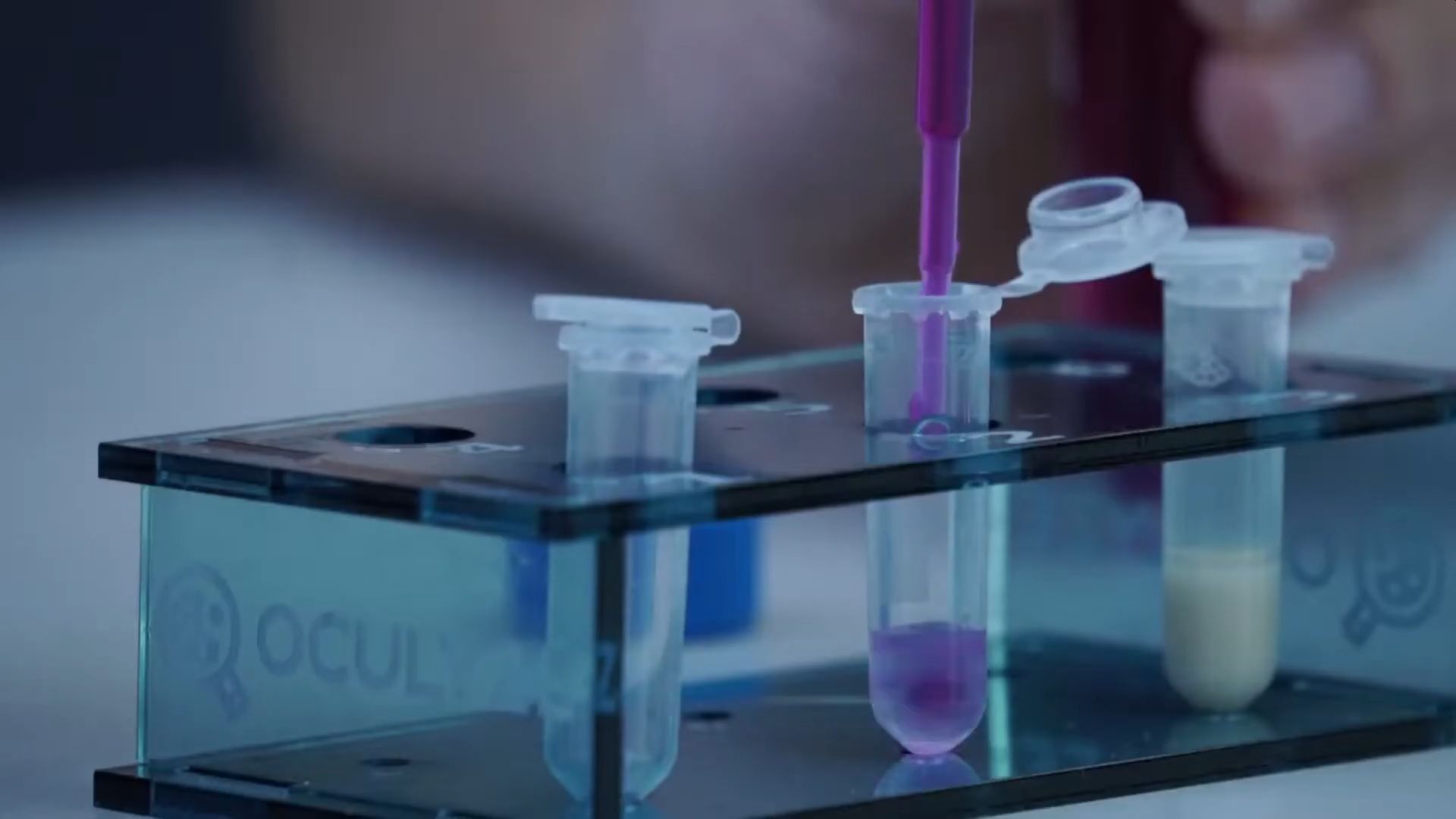
To determine the viability of your yeast, you must stain it with either methylene violet or methylene blue. For brewer’s yeast, the best staining technique requires using methylene violet.
To stain the sample, mix it with a staining solution. Most types of yeast show the best results when mixed at ratios in the area of 1:1 – 1:5. A 1:1 mixture is recommended for most yeast strains.
A 1:4 mixture, for example, means that there are 5 parts in total, of which one part is the coloring agent and four parts are from the sample.
For more details on staining your sample with methylene violet and a video detailing all the steps, check out this article: Staining the Sample for Viability Test.
Yes, lab work is important, but it does not have to be laborious or complicated. You can invest in a high-tech yeast cell counting equipment that will interface directly with your phone and provide you with precise readouts.
Once you’ve tested your yeast and can be sure it meets your standards, you can put a regular testing practice into place.
Are you still pitching fresh yeast every time? By reusing your yeast, you can save up to hundreds of thousands of dollars per year on just yeast alone!
Join the hundreds of brewers from all around the world using the smartest Automated Yeast Cell Counter! Request a Free Demo Account today and experience firsthand how Oculyze can take your brewery to the next level!
Sources:
- Paul R. Glenister, Some Useful Staining Techniques for the Study of Yeast, Beer, and Beer Sediments, Proceedings. Annual meeting – American Society of Brewing Chemists, Pages 163-167
- Katherine A. Smart, Kay M. Chambers, Ivan Lambert, Cheryl Jenkins & Christopher A. Smart, Use of Methylene Violet Staining Procedures to Determine Yeast Viability and Vitality, Journal of the American Society of Brewing Chemists, Pages 18-23
- https://www.morebeer.com/articles/Yeast_Management
- https://www.beer-brewing.com/beer_brewing/beer_brewing_yeast/yeast_viability_replacement.htm
Stay on top on important fermentation insights – subscribe to our monthly newsletter and receive a hand-picked selection of our most relevant articles straight to your inbox.
Never miss a beat and get real time updates with a new article each workday by subscribing our social media channels.
Instagram | Facebook | Twitter | YouTube