Malbec Flavor Profile
You don’t have to be just a wine drinker to be wondering about the Malbec flavor profile. Plenty of wine makers spend years making wine, perfecting their craft, and truly becoming experts at that, without really understanding the language to describe the way the product tastes. There are so many wine terms, and they can be hard to keep track of, so how can we describe this popular red wine in terms of flavor and aroma?
What Is Malbec Wine?
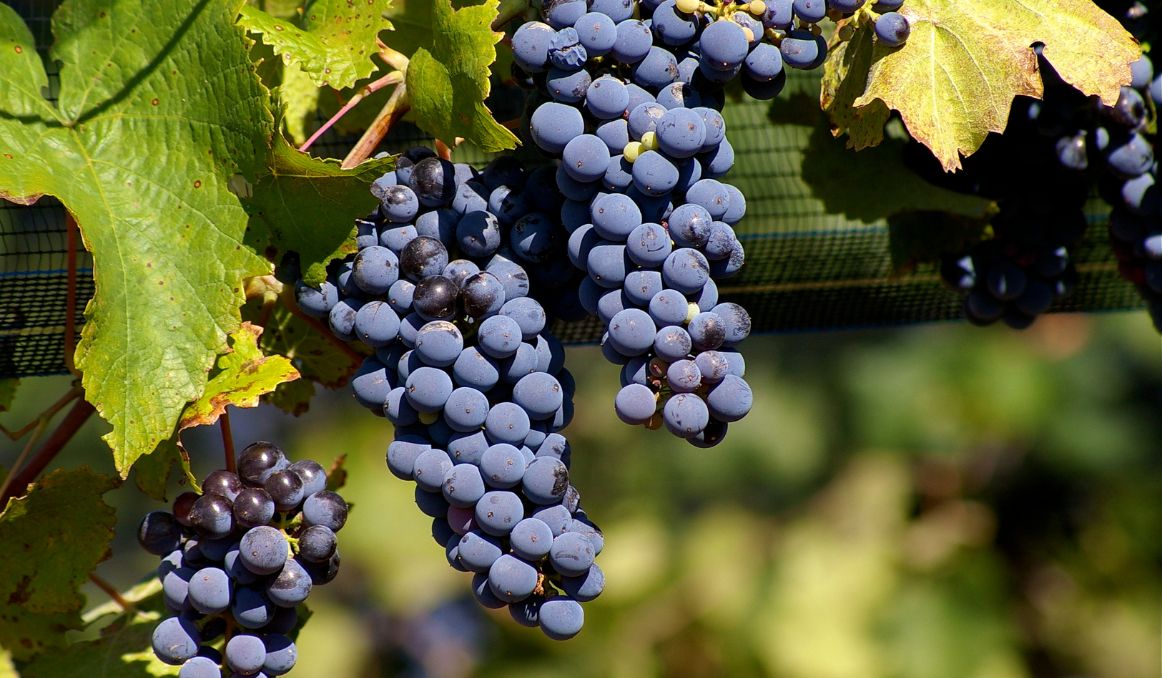
First, let’s talk about what a Malbec wine is. Malbec is native to France, where the grapes were originally grown to blend with other wines, making them softer and slightly sweet.
The grapes are a dark purple, rich in robust tannins, and are one of the only grapes allowed in Bordeaux wine blends.
The reason Malbec grapes are so often used to blend into other wines has to do with their color as well as their body. Malbec grapes have one of the richest body profiles in wine making.
But it has not always been that way.
Originally Malbec grapes did not do well in the French climate. They would often rot and die on the vine. As a result, wine makers did not plant very many Malbec grapes. And they certainly never planned to have Malbec as a standalone wine.
Instead, they simply planned to use any of the surviving Malbec grapes to blend into other wines.
It would be hundreds of years later, and even a couple of hundred years into colonization of the New World, that Malbec would truly thrive.
A provincial governor in Argentina asked a French economist to bring back some grapevine cuttings for growing wine grapes in Argentina.
One of those cuttings was Malbec.
Whereas in France Malbec grapes have to deal with a hot, and unforgiving sun, as well as rot, pests, and frost, grapes in Argentina are grown at higher altitudes, which have a dry and cool climate that is amenable to these delicate grapes.
The grape flourished in Argentina, and soon grew to take over all the other wine grapes on the market. Argentinians loved Malbec wine and adopted it as their own from that first cutting in the mid-1900s.
It would be another several decades before Argentina exported Malbec wine. The crashing economy in the early 2000s drove Americans to seek out less expensive, and yet still flavorful and full-bodied wine. Fortunately, for them, and for the rest of the world, they discovered Malbec.
Today, 70% of Argentina’s wine production is Malbec, and 75% of the world’s Malbec comes from Argentina.
However, other countries have entered the Malbec scene, and as a result it is one of the most popular wines in the world.
Other Countries
Apart from France and Argentina, many other countries have entered the Malbec scene. Of course once the Americans were turned onto Malbec, wine makers there began to grow their own Malbec grapes. It started off, as could be suspected, as a blend for California Bordeaux. But it is now grown explicitly for Malbec wine in California, Washington, and Oregon.
It should also come as no surprise that the neighbor to Argentina, Chile, would be inspired to grow their own Malbec grapes. Still, in Chile, these tiny grapes are typically grown only to add to Bordeaux blends.
South Africa is another country that grows the Malbec grape for blends, but it began bottling Malbec as a single varietal wine in the 1990s.
Interestingly, Australia also began growing Malbec grapes in the 1800s for bulk wine production. It continues to do so for both blends and single varietals today.
And finally, neighbor to Australia, New Zealand began to scale its Malbec operation in the 1990s, though it is still used mostly in blends.
Malbec Flavor Profile

The flavor profile of Malbec can change wildly based on the region in which the grapes are grown.
Malbec wine grown in Bordeaux, France is higher in tannins, is darker, is richer, and has a more astringent finish.
Malbec from Argentina, in contrast, has a more jam-like texture, it is more fruit forward, and it is a softer wine.
And you can find virtually every Malbec flavor profile in between those two extremes, depending on its specific region.
In general, Malbec can be described as having a strong kick, fruity, and jammy. It can include dark fruit flavors like black cherry, pomegranate, plum, raspberry, blackberry, blueberry, and raisin.
Again, depending on the region, you might also pick up notes of coffee, molasses, leather, black pepper, gravel, tobacco, or cocoa.
It is a versatile wine best paired with meat-driven dishes, especially barbecue. You will often find Malbec alongside dark meat poultry, lean red meat, charcuterie boards, or strong cheeses, like Gouda and Manchego.
Malbec versus Merlot and Pinot Noir
Many people start off wondering what the big difference between red wines is. At first glance, you might think they’re all the same, or at least very close.
Nothing could be further from the truth.
Where a Malbec is tangy and fruity, a Merlot is even more full bodied and smooth. Because of it’s fruity flavor, Malbec is more commonly paired with spicy foods.
When compared to Pinot Noir, Malbec is meatier and grittier, remember that gravel note mentioned above. Pinot Noir is lighter, more aromatic, and typically lower in alcohol content.
It is interesting to note, however, that Pinot Noir and Malbec are sometimes blended to make rosé.
As with most things, especially when it comes to flavor and aroma, descriptions often do little in comparison to the actual experience.
While the language that we use can give us a way of describing our experience, nothing can take the place of actually popping the cork on a bottle and giving it a chance yourself.
Cheers!
Passionate about the wine and/or beer making process? So are we! If you’re interested in finding out how you can use our technology to control fermentation and monitor your yeast, save work hours and improve the cost-efficiency of your business, drop us a line at [email protected] or check out our product pages:
- Oculyze FW (Fermentation Wine) Yeast Cell Counter App + Hardware
- Oculyze BB 2.0 (Better Brewing) Yeast Cell Counter App + Hardware
Also, you can now get access to a fully functional demo account to test your yeast via our Web App. Completely free of charge and with no commitment to purchase.