Kahm Yeast on Sourdough Starter
So many bakers, even experienced ones, will toss a fermenting food or sourdough starter when they see what they think is mold. Even if they know they are dealing with kahm yeast on a sourdough starter, they might toss the whole starter in the interest of starting over. This reaction is, of course, understandable, but it is not necessary. You can still work with fermented foods that have developed kahm yeast, in fact, it might even do you some extra good.
What Is Kahm Yeast?
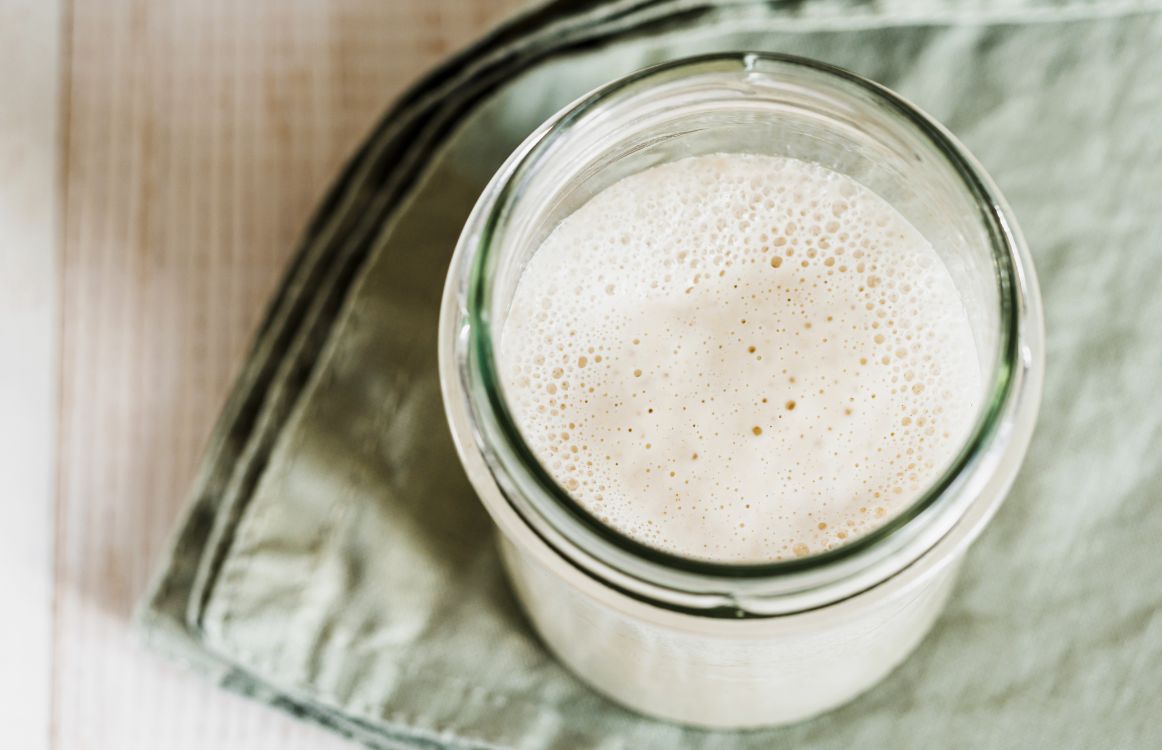
Kahm yeast is composed of several different strains of yeast, and it can show up in different varieties. Most commonly, however, you will find Pichia, Debaryomyce, Mycoderma, Hansenula, and Candida. It shows up on fermenting foods as a thin, white film that covers the entire surface area of a jar or sourdough starter. Many people fermenting pickles, sauerkraut, or other veggies will find the brine looks cloudy. That’s kahm yeast.
Is Kahm Yeast Harmful?
Kahm yeast is entirely harmless. It looks a bit unsettling when you see it on your food, and it may throw the taste off a bit, but you can consume foods that have been invaded by kahm yeast without fear.
Why Does Kahm Yeast Develop on Fermented Foods?
Fermenting any food is a delicate balance of yeast, bacteria, salt, and acid as well as an absence of oxygen. When any of these elements is off, you create an environment in which kahm yeast can thrive. Just like when we ferment any food or beverage, we create environments desirable to Saccharomyces cerevisiae or Saccharomyces pastorianus or even Lactobacillus or Brettanomyces. We want a symbiotic relationship to form among the fermentable sugars and the yeast and bacteria that love them. Those yeast and bacteria will ferment and create a probiotic food rich in aromas and flavors we have come to crave. They not only taste good, but they are also good for us.
However, when we create the ideal environment for fermentation, if we do not strike the right balance, we invite other yeasts and bacteria we may not want.
Here’s the thing, when done right, healthy yeast and bacteria know how to effectively fight off foreign invaders that show up in the form of unhealthy yeast and bacteria, and even harmless strains like those found in kahm yeast.
But when we don’t provide the right environment, say we allow too much oxygen or we forget to feed our sourdough starter, the balance is thrown off and the healthy yeast and bacteria cannot effectively fight against those invaders.
Kahm Yeast on Sourdough Starter
The above scenario is precisely what happens with your sourdough starter. Typically, you forget to feed it the nutritious flour and water it wants, then alcohol begins to form on the top layer, creating space for oxygen, and kahm yeast arrives and gets to work consuming whatever it can as a source of energy.
Now, the healthy yeast and bacteria in your sourdough starter are not strong enough to fight off kahm, and you will see the effects when you finally get back to your poor neglected starter to feed it.
What It Looks Like
Though kahm yeast shows up as a variety of different yeast strains, it is always harmless, and it always looks the same – a thin white film that spreads evenly across the surface of your fermenting food.
The Difference Between Kahm Yeast and Mold
You might be concerned when you first see kahm yeast and mistake it for mold. It is actually quite easy to differentiate yeast from mold. Yeast, as noted above, shows up as a thin white film. In contrast, mold shows up as fuzzy, usually in splotches and bumps, and while it can sometimes be white, it is usually also colored in greens, blacks, oranges, and pinks.
Mold can be dangerous and make you seriously ill. So if you think you might have mold on your sourdough starter, toss it.
The old adage remains true here – when in doubt, throw it out.
Causes of Kahm Yeast
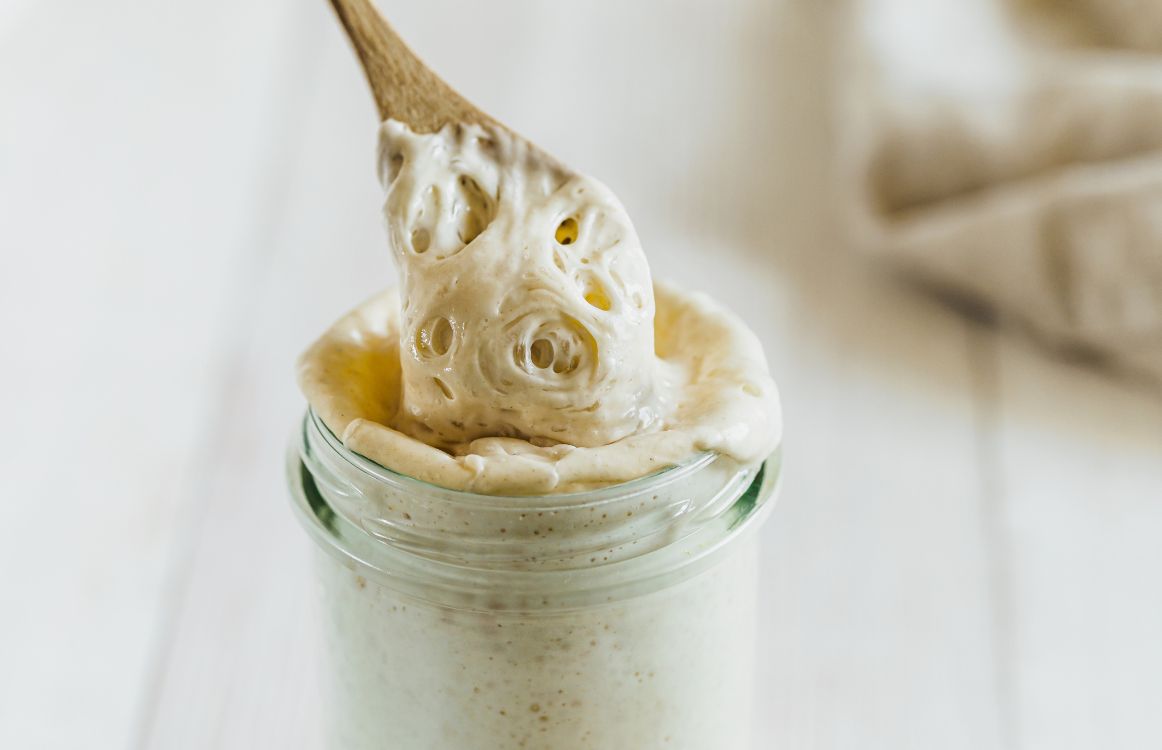
The primary cause of kahm yeast on your sourdough starter is neglect. As described above, the balance of your yeast and bacteria has been thrown off, and the perfect environment has been created for kahm yeast to come and feed.
It could be that you used an unsanitary knife or other utensil last time you opened your jar. It could be that your hands were not perfectly sanitary when you last touched your starter. Or it could be that you simply haven’t fed the starter in a while, the acid levels rose, and kahm found a happy home.
The bottom line is, kahm yeast is totally normal, and you can stop blaming yourself because it is also an easy fix.
What to Do About It
If you find kahm yeast on your sourdough starter or any other fermenting food, simply scrape it off. The thing to remember is that any yeast that has gotten into your food is probably running throughout the food, so scraping it off will not prevent it from coming back. It has made its home, and it will continue to thrive.
You will find yourself having to continually come back and scrape off more kahm yeast.
To stave this off for a bit longer, you can move your starter to a new, clean jar and try to go from there, but you may just be stuck with kahm yeast on this starter.
The good news is, it is completely safe to consume and may even be good for you.
How to Prevent Kahm Yeast in the Future
In the future, if you want to prevent kahm yeast from invading your sourdough starter, make sure to use only clean and sanitized equipment, and sanitize everything every time you engage with the starter.
Also be sure you keep your sourdough starter in an airtight container.
Then, feed and water it regularly, and you should be kahm free.
Cheers!
Not our customer yet? Join the hundreds of brewers, winemakers and bakers from all around the world using the Smartest Automated Yeast Cell Counter! Request a Free Demo Account today and experience firsthand how Oculyze can take your bakery to the next level!
Sources: