How to Slow Down Yeast Fermentation
While most in the brewing world understand that brewers don’t do as much “work” at making beer in terms of creating the final product, we also understand that brewers spend years and even decades becoming highly intuitive about creating the ideal environment for beer to basically make itself.
One question that arises often around fermentation, and the brewer’s role therein, is how quickly or slowly beer should ferment, and how to speed up or slow down yeast fermentation.
Yeast and Yeast Fermentation
When we say brewers don’t do a lot of work, what we mean is that the real worker in this process is the yeast.
After all, thousands of years ago, beer was likely discovered rather than made or invented.
Beer is the product of fermented grain water. That’s it.
Toasted grain is boiled and left out. Yeast is attracted to the boiled grain water (wort). The yeast consumes the sugars in the wort and converts them to alcohol, and a few days later you have beer.
It really is that easy to make beer.
But, is it really that easy to make great beer?
That’s where the brewer, the craftsman, the artisan, comes in.
You see, yeast is plentiful, and yeast is picky.
There are currently hundreds of different strains of yeast catalogued and there likely exist hundreds if not thousands more strains.
These yeast strains run the gamut from very low alcohol tolerant baker’s yeast to much higher alcohol tolerant champagne yeast.
In the wild, a brewer would simply allow nature to take its course, with whatever local yeast is attracted to the wort to do its job.
But in a commercial environment, even for most homebrewers or small breweries, the brewer carefully selects the yeast for the beer they hope to produce.
Here is where a lot of craft comes into play.
Yeast requires a delicate balance of sugars and temperatures.
Too much sugar and the yeast could get overwhelmed and stuck. Not enough sugar will slow down fermentation to where it can stagnate. Too low of a temperature for your yeast could make it lie dormant, and too high of a temperature could speed up fermentation too quickly.
Why Would You Want to Slow Down Fermentation?
“So what?” You ask. What’s the big deal?
As long as we make beer, who cares if it is fast or slow, right? Wrong.
The problem with a fermentation that is too fast is that you lose a lot of the character and quality most beer enthusiasts are seeking these days from their beer.
Sure, you could produce a beer in about week. It would be drinkable and passable as beer.
It would certainly be a throwback to old school beer from thousands of years ago.
But what true craftsmen in beer are seeking during the science of fermentation is the esters, the colors, the flavors and aromas that all come from taking the beer process low and slow.
All kinds of problems can arise from having too much fermentable sugar or too high of a temperature in your wort when preparing for fermentation.
Your yeast could get overwhelmed, stressed out, and stagnate.
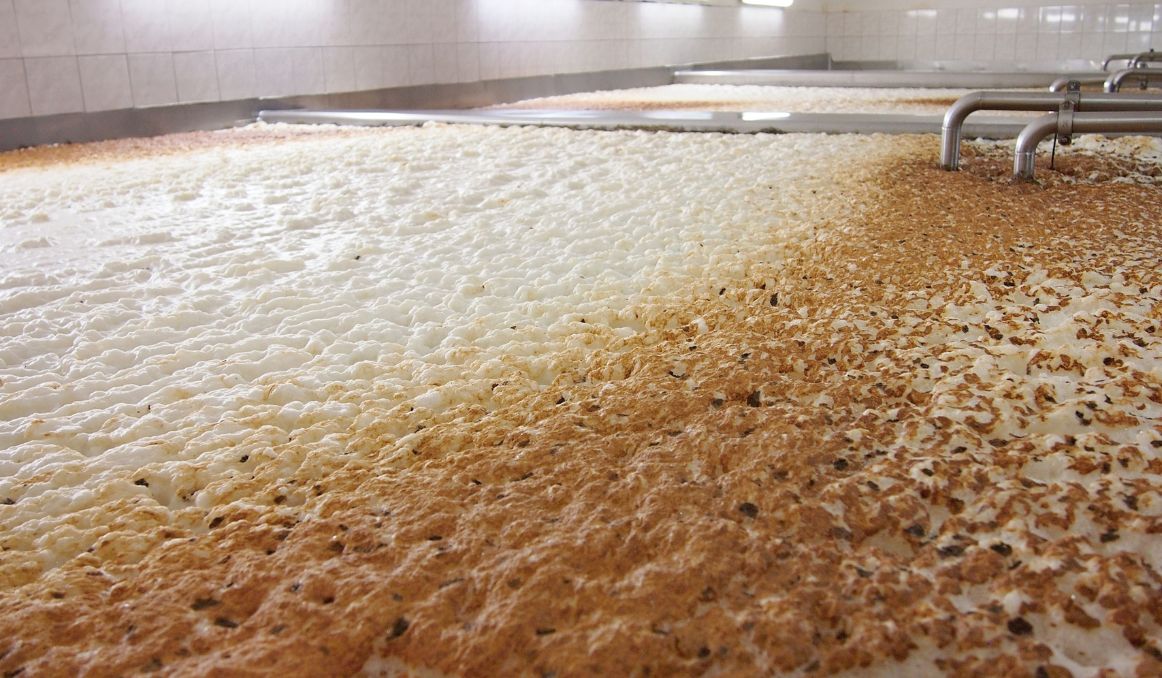
Conversely, your yeast could eat up all the sugar and convert it to alcohol, carbon dioxide, and krausen (the foam on the top). The krausen could then build up too high and block your airlock, stopping your carbon dioxide from escaping and causing a ticking time bomb.
In the end, a fermentation process that is too quick will cause you to lose much of the desired character in your beer.
Low and slow is always best when seeking artisan beer.
How to Slow Down Yeast Fermentation
As to how to slow down yeast fermentation, it depends on the angle from which you are coming.
If you are wondering how to ensure a slowed down fermentation from the beginning, you will take one approach.
If you are trying to figure out how to slow down a fermentation already underway that seems to be going too fast, that will require a different plan of action.
Before Fermentation
As a general rule, you want a long, drawn-out fermentation, even for the quickest beer.
The best way to give all your flavors, aromas, esters, and other characteristics a fighting chance is to give your yeast several weeks, if not longer, to ferment, ferment again, and then clean up after itself.
This process will require you to ensure a good balance of sugars to yeast, choose the right yeast for the type of beer you are aiming for, and then adjust your temperature accordingly.
Once you have brought your wort to a boil and are ready to pitch your yeast, be sure you bring your wort down to a cool 70 degrees Fahrenheit. When you pitch your yeast, allow it several days at this temperature to wake up, start consuming, reproduce, krausen, and then lie dormant.
At this point, you will enter secondary fermentation, where you can skim off the most obviously clumped together yeast and then allow the remaining yeast to continue fermenting and then clean up after itself, ridding your beer of any off flavors and aromas.
This process can take several weeks, so have patience.
After Fermentation
Now, let’s say you have begun fermentation and you notice your yeast is fermenting too fast – your gravity readings are dropping fast, your krausening has begun and ended quickly, etc.
The most appropriate way to slow down fermentation is to drop your temperature.
You may have simply allowed your yeast to get to work in too high of a temperature to get to work in, and it goes overstimulated.
You can crash cool your beer by bringing it all the way down to 32 degrees Fahrenheit to stop the yeast from working at all.
Then you can slowly bring your beer back up into the 60s and then up to 70 to get the stalled yeast activated again. You may need to agitate it a bit or pitch a bit of yeast starter to get it going.
The key, as always, is to experiment with what works for your beer, your yeast, and your process.
But when it comes to slowing down or speeding up fermentation, temperature is almost always going to be the key.
Cheers!
Are you still pitching fresh yeast every time? By reusing your yeast, you can save up to hundreds of thousands of dollars per year on just yeast alone!
Join the hundreds of brewers from all around the world using the Smartest Automated Yeast Cell Counter! Request a Free Demo Account today and experience firsthand how Oculyze can take your brewery to the next level!
Sources:
Stay on top on important fermentation insights – subscribe to our monthly newsletter and receive a hand-picked selection of our most relevant articles straight to your inbox.
Never miss a beat and get real time updates with a new article each workday by subscribing our social media channels.
Instagram | Facebook | Twitter | YouTube