Particle Counter in Pharma Industry
The essential nature of counting efficiency in a particle counter
The pharmaceutical industry is hard pressed to get everything exactly right down to a perfect science. This level of perfection includes each individual particle, how many particles there may be, and the size of those particles. This level of rigor means you need to have a top-quality particle counter in the pharma industry and a method of measurement to go along with it.
What Is a Particle Counter Used for?
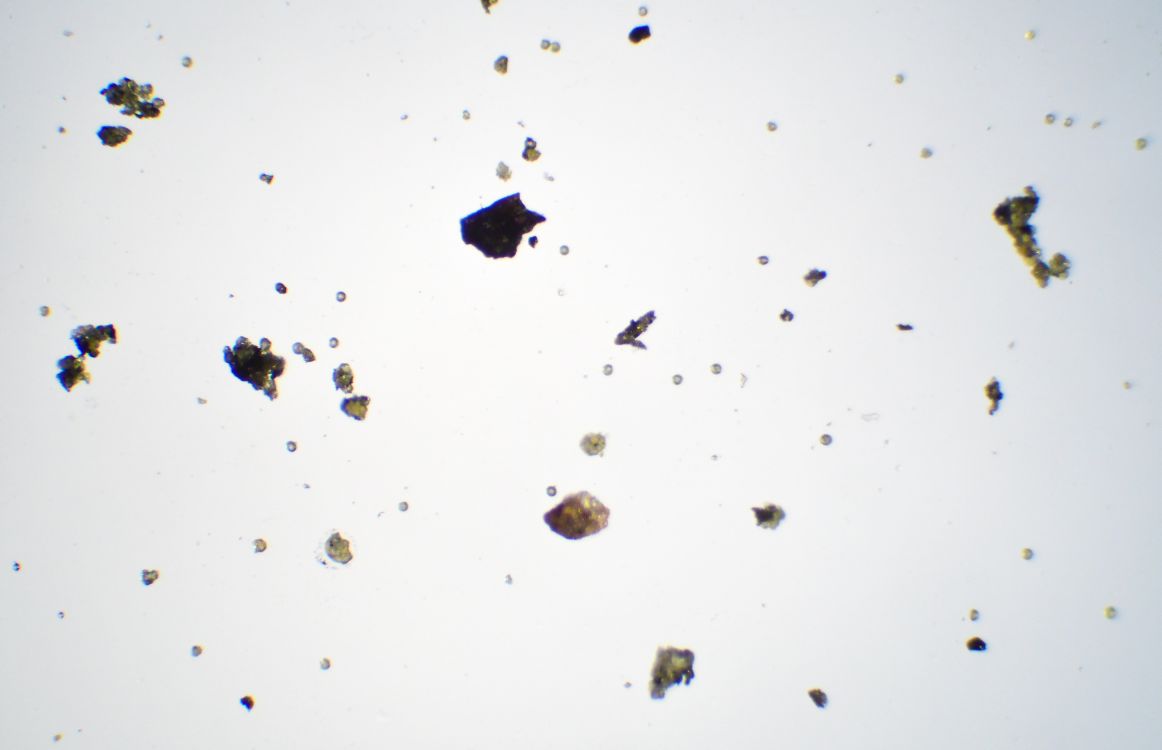
A particle counter is a device that measures particles across different types of media, and it can be used for a wide variety of purposes. It can measure air quality, water quality, fuel quality, electronic components, medical devices, and even the quality and consistency of metal and rocks.
In general, a particle counter will read air, liquid, or solids and report back on the number of particles, the size of those particles, and even the quality of those particles to some degree, depending on you particle counter.
The particles detected by a particle counter cannot be seen with the visible eye and can be as small as .1 micron, which is more than 200 times smaller than the diameter of a strand of hair.
The primary goal of a particle counter is to detect contamination.
Types of Particle Counters
Aerosol
Aerosol particle counters come in two different types. There are smaller, portable devices that can be moved from room to room and larger, stationary machines meant to constantly monitor the air in a cleanroom.
The smaller, portable particle counters can typically measure particles in both air or liquids and do so by scattering light to reveal particles suspended in the air.
In either event, a sample of air is pulled into the machines via a vacuum pump, and as the air runs through the machine a laser light is scattered across the particles. The machine, also called a discrete particle counter, then returns with a particle count.
Condensation particle counters, also called CPCs, will detect particles by magnifying them to 200% using butanol or isopropyl alcohol. These devices are often favorites for certifying cleanrooms as they have lower flow rates.
The flow rate is how much air is pulled into the machine and how quickly. With a lower flow rate, the air is pulled in more slowly so more, and smaller, particles can be detected.
Typically, you have to take multiple samples from various locations in the room and then calculate the total number of particles based on the numbers you get. Thus, if you are looking for a dust particle counter, you would want an aerosol detection device.
Liquid
To measure particles in liquids, like, for example, a fuel particle counter to measure metal particles in fuel, you would utilize a liquid detection device. Oftentimes, with this fluid particle counter, you pass the liquid through the device and the device will measure the particles using either light obscure or light scatter. Light scatter is typically used for particles to be measured smaller than 2 microns.
The device will then return with the number of particles in your liquid, and that number can be compared to the standards that must be met.
Solid
A solid particle counter can detect various particles on a solid piece of matter like crushed rocks or materials from construction sites. They are highly efficient at sizing larger particles.
Cheap Particle Counters and Their Problems
With the advent of digital particle counters across the range of options and applications to support those particle counters, cheap particle counters are simply not worth the money you might save.
Low-cost devices will often find interference issues between air and water droplets and return with a gross overestimation of particulate matter, making your job even harder.
Further, dust can accumulate in these machines and block air flow, making counts highly inaccurate.
What Is Particle Counting in the Pharma Industry?

In the pharmaceutical industry, virtually every type of particle counter could ostensibly be put to use. During manufacturing, you will want an aerosol particle counter to ensure you have a cleanroom free of particles that match the standards your specific process has set. Also, a liquid particle counter will be useful for measuring particle size distribution, which tells the manufacturer how uniform particle distribution is throughout a particular drug. Understanding particle distribution and uniformity allows the manufacturer to determine the efficacy of that particular drug.
This knowledge can save manufacturers tremendous amounts of money as it can help prevent ineffective drugs from going to market and getting recalled.
Finally, a solid particle counter can help count particles in drugs ready for distribution and help determine the particle size distribution, catching any problems before they get to market.
Particle Counting via an Image Analysis Platform
There are countless applications for a generic particle counter, and this stands particularly true for applications where foreign objects which should not be counted are not expected.
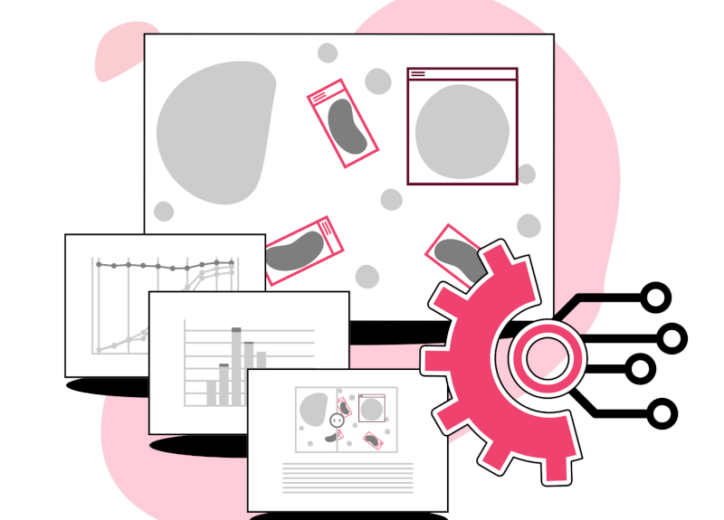
Using image analysis and pattern recognition, the Oculyze Particle Analyzer can be customized to your specific needs. If a specific detection is needed, the system can always be expanded and combined with a classification to differentiate what is being counted.
You can give the Oculyze system a try yourself: https://iap.oculyze.net/particles
All you need are some images of the particles to be counted / detected.
Just please note that the recognition provided here is solely for demonstration purposes and may not accurately represent the performance of our product. Our customers receive customized recognitions tailored to their specific needs, which ensures high levels of accuracy.
A custom designed particle counter will save you time, money, and energy trying to count and calculate by hand, which is a notoriously error-prone process, and keep separate spreadsheets. Oculyze allows you to keep all of your information in one efficient system designed to aid you in accurate and specific particle counting for your pharmaceutical manufacturing.
The future of technology has arrived, and it is here to help.
Did you know that there is no need to start from scratch if you have a solution that works already? Our customized image recognition software can be fully integrated into your existing software due to the open nature of our API.
With our Image Analysis Platform, you can save hundreds of hours of work that would have gone into manual labor. Image analysis automation provides you with accurate results and secure data management in less time, so you can save your resources for something that brings more value to your business.
Let artificial intelligence do the hard work for you. Start saving time and costs now! Want to know more? Contact us and we’ll be happy to help!