Double Pitching Yeast: Behind the Trend
Double pitching yeast is an issue that arises often in brewing and for different reasons. Some brewers want to add secondary yeast after primary fermentation and others want to add more yeast to a batch that has been under pitched. Both approaches warrant description and discussion.
What Is Yeast?
Before we get into double pitching yeast, it is critical to understand what yeast is and how it functions in the brewing process.
A single celled, eukaryotic living organism, yeast has been around for hundreds of millions of years at the very least. Its sole function has long been to find sugar as an energy source. Present in virtually all spaces on earth except for the extremely hot ones (like volcanoes), yeast is found in abundance on surfaces, in the air, and even in our bodies. Scientists theorize that there are more than 4,500 strains of yeast in existence on earth, but they have catalogued only 1,500 of them. In brewing, we only use a little more than 400 strains, most for brewing ale and the rest for brewing lager.
From the beginning, yeast has been happy to ferment for humans. It is what it was doing long before we came along anyway.
Yeast will find sugar sources in nature, consume the sugar, and produce water, alcohol, and carbon dioxide as waste products.
Humans have been fortunate to work in concert with yeast as we produced sugary beverages that yeast would then ferment into alcoholic beverages for us.
That is how wine, beer, kombucha, and all other alcoholic drinks have been made from the beginning of time.
The Role of Yeast
Before industrialization, brewers and winemakers relied on nature to take its course. There was a brewing season and a winemaking season.
Brewers would harvest grain, toast it for flavoring, crack it to expose the sugars inside, and then boil it in water.
At that point, as the water cooled and became safe for yeast, which will burn and die at temperatures that are too high, the yeast would be naturally attracted to the sugary liquid and get to work fermenting.
Brewers could see their wort frothing and bubbling and know that beer was coming soon.
How to Use Yeast in Brewing
Today, thanks to Louis Pasteur in the 1800s and his discovery of yeast under a microscope, corporations have learned to select specific strains of yeast for brewing.
Now, brewers can buy dry or liquid yeast and pitch it into their wort. They can see the yeast cells under a microscope and test for vitality and viability. And they can measure whether the yeast is having the desired effect on the beer along the way.
What Is the Right Pitch Rate?
Whereas before, brewers never had to worry about pitch rates, as they simply allowed wild yeast to work its magic, today, brewers must be mindful of how much yeast they pitch into the wort to get the right balance of fermentation, alcohol, esters, and other aromas and flavors. Brewing has become a science as much as a craft, with tools and equipment in almost every brewhouse and in the homes of home brewers across the globe.
Now, while we have the ability to work directly with yeast rather than trust it to ferment for us, which gives us a great deal more power and control over the process, we also now have to be mindful that we are pitching at the right rate.
In general, brewers follow the rule of pitching around 1 liter of yeast per barrel with fresh yeast. The common pitch rate formula is 1 million cells per milliliter per degrees Plato.
At the same time, some brewers advise pitching slightly less than that, .75 million c/ml for ale, and slightly more, 1.5 million c/ml for lager, but of course the brewer will have to make an individual decision based on the yeast and the beer being brewed.
Under Pitching
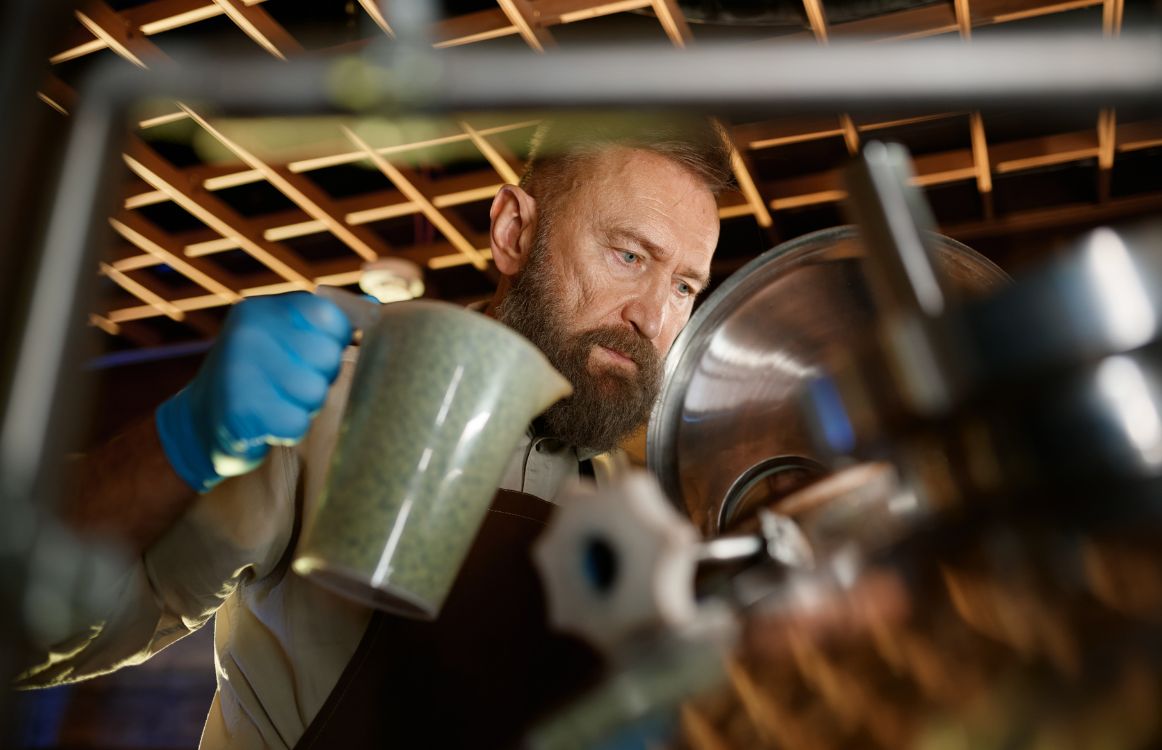
Under pitching yeast, meaning adding too little yeast runs the risk of the yeast being overwhelmed by the sugar and the alcohol it produces as well as its own reproductive process, which happens during fermentation. When the yeast gets stressed in this way, it may go stagnant and stop fermenting.
In this case, the brewer will have to pitch more yeast, or “double pitch.”
Over Pitching
Adding too much yeast to the wort can lead to a sped-up fermentation process that reduces ester production, affecting the character, mouthfeel and flavor of the beer. It can also lead to low viability and a higher percentage of old cells in the slurry, which is particularly significant if you want to harvest the yeast once the fermentation is done.
Some brewers will argue that, between the two, you always want to under-pitch, as the results are somewhat easy to correct by simply adding more yeast. On the other hand, it is extremely hard to correct beer that has been over pitched. But, of course, none is good and you want to make sure you pitch just the right amount.
Double Pitching Yeast
There are two types of double pitching yeast in the world of brewing.
Double pitching in general refers to having to add more yeast to a stagnant batch, which you will know needs to be done if your gravity readings stop moving. You can also tell because your brew is not bubbling and frothing like it should.
In this case, you can add another liter of fresh yeast for your barrel, or an extra packet of dry yeast to get your batch brewing again.
If you are interested in this new trend of pitching a different yeast for secondary fermentation after racking your beer, this is a different story.
In this case, the trend calls for double pitching so you can add new esters, new aromas and flavors, to blend with the existing aromas and flavors.
You would pitch just like you did the first time, the full quantity of fresh yeast or packet of dry yeast for a barrel.
Ideally, when experimenting, in general, but when experimenting with different strains of yeast, in particular, you want to have complete control over how much yeast you’re pitching and double-pitching, so keep an eye on your yeast cell concentration and yeast viability. Otherwise improving or reproducing the process will be close to impossible to do.
Either way, remember that brewing is still more craft than science, and that you will have to be willing to experiment along the way.
Cheers!
Are you still pitching fresh yeast every time? By reusing your yeast, you can save up to hundreds of thousands of dollars per year on just yeast alone!
Join the hundreds of brewers from all around the world using the Smartest Automated Yeast Cell Counter! Request a Free Demo Account today and experience firsthand how Oculyze can take your brewery to the next level!
Sources:
- https://blog.krones.com/craftbeer/double-yeast-pitching-the-new-trend/
- https://www.homebrewersassociation.org/forum/index.php?topic=15673.0
- https://www.precisionfermentation.com/blog/yeast-pitching-rates-beer-fermentation/
Stay on top on important fermentation insights – subscribe to our monthly newsletter and receive a hand-picked selection of our most relevant articles straight to your inbox.
Never miss a beat and get real time updates with a new article each workday by subscribing our social media channels.
Instagram | Facebook | Twitter | YouTube