What Is the Yeast and Sugar Balloon Experiment?
For brewers, winemakers, bakers, and others in the fermentation industry, and really anyone interested in what yeast can do, the yeast and sugar balloon experiment is a great one to undertake. Especially if you have kids to whom you are trying to explain the dynamics of what you do at work all day, this experiment really gets to the heart of it.
The Role of Yeast
Fermentation would not exist without yeast. It’s sad. But true. Fortunately, yeast is abundant in most parts of the world. As long as the environment is not so hot that the temperature kills the yeast or so frigid that the yeast will lie dormant and be useless.
Otherwise, you can find yeast in the jungle, in the forest, in a prairie, in the desert – you name it.
And yeast, for the hundreds of millions of years it has been on earth, has always only done one thing: hunt for sugar.
You see, yeast is a single-celled, eukaryotic, living organism. It has a self-contained nucleus, it can reproduce asexually, and its sole energy source is fermentable sugar.
Thus, you can harvest yeast from leaves, fruit, and other local surfaces for fermentation purposes.
Yeast in History
The reality is that for millennia, brewers, winemakers, and bakers did not collect their own yeast. They simply allowed nature to take its course.
The winemaker would crush grapes to make juice.
The brewer would boil toasted, cracked grain to make wort.
The baker would mix flour and water to make dough.
And then they would wait.
In short time, yeast would be attracted to the fermentable sugars in the ingredients and get to work.
In every single case, the yeast will get into the mixture, consume the sugars for energy, and then release alcohol and carbon dioxide as natural waste products.
When oxygen is present, yeast produces less alcohol, it is true, but yeast actually creates its own airlock while it is fermenting that removes oxygen from the product, so yeast switches to anaerobic fermentation and produces more alcohol than water.
This truth is why grape juice becomes wine, wort becomes beer, and bread dough rises.
The Yeast Sugar Balloon Experiment
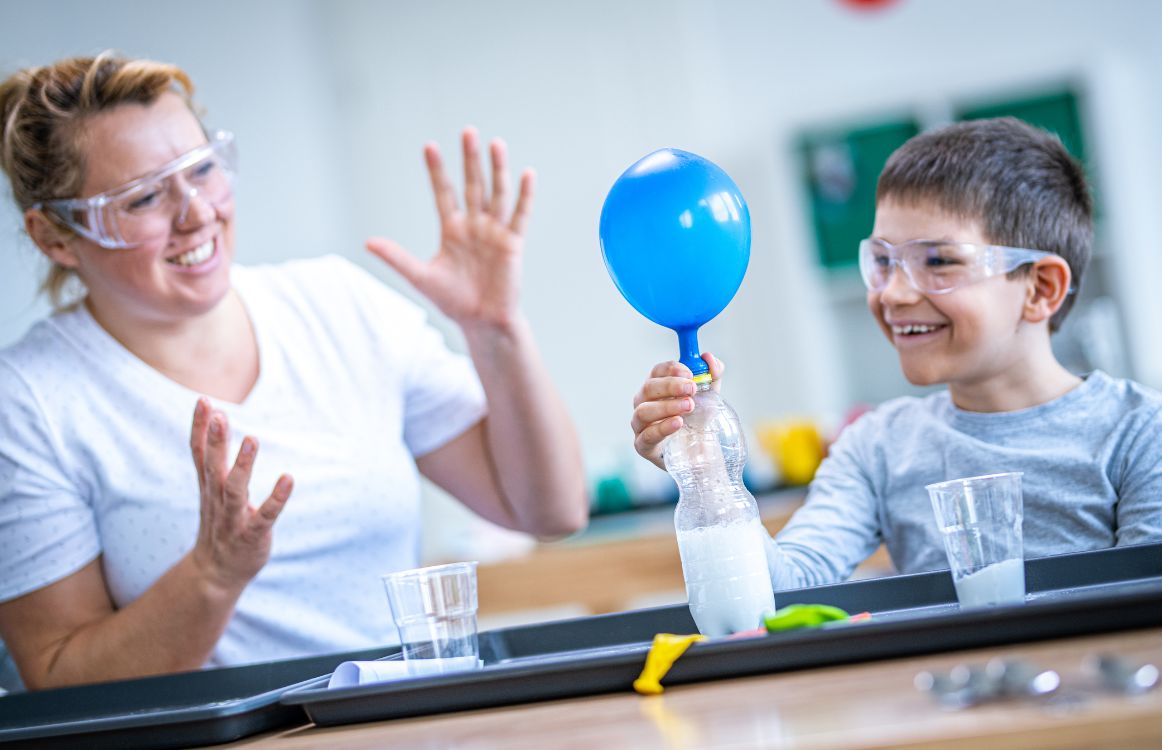
To give an example of what is happening inside of these products when yeast is fermenting, you can conduct an experiment with sugar, yeast, a balloon, and a 1 liter plastic bottle.
You will need:
- 1 packet of active dry yeast
- 1 cup of warm/hot water (aim for 110 degrees Fahrenheit so the yeast and sugar dissolve completely)
- 2 tablespoons of sugar
- 1 large balloon
- One rubber band
- 1 empty plastic bottle (1-liter)
The first thing you will do is dissolve the sugar in the water. Stir it until you cannot see any sugar grains remaining. Next, add your packet of yeast and stir until it is dissolved as well.
You will notice the water start bubbling almost immediately as it starts creating carbon dioxide.
Now, blow up your balloon and allow it to deflate several times until the rubber is stretched. Then, set it aside.
Transfer the water into the plastic bottle and place the balloon over the top of the bottle. Attach it with a rubber band to keep the balloon in place.
Now wait a few minutes.
You will notice that the balloon starts to fill up and expand.
What Is Happening?
The carbon dioxide created by the yeast as it consumes the sugar in the water is filling up both the bottle and the balloon.
This process is exactly what is taking place inside of beer, wine, and bread when the yeast is consuming those fermentable sugars.
It is a great example of how we went from unleavened, flat breads like pita and tortillas to fluffy breads with holes throughout like sourdough.
As the yeast works its way through the dough, the carbon dioxide has nowhere to go. It is caught inside the sticky mixture of flour and water, so it pushes out against the dough and rises.
In beer and wine, we get bubbles that are either trapped in an airtight vessel, giving us sudsy beer, or released in an open air vessel, leaving us with a flat wine.
Try this experiment with your brewing crew, with your buddies, or with your family to show them what is happening when you are busy fermenting.
Cheers!
Are you still pitching fresh yeast every time? By reusing your yeast, you can save up to hundreds of thousands of dollars per year on just yeast alone!
Join the hundreds of brewers and vintners from all around the world using the Smartest Automated Yeast Cell Counter! Request a Free Demo Account today and experience firsthand how Oculyze can take your brewery or winery to the next level!
Stay on top on important fermentation insights – subscribe to our monthly newsletter and receive a hand-picked selection of our most relevant articles straight to your inbox.
Never miss a beat and get real time updates with a new article each workday by subscribing our social media channels.
Instagram | Facebook | Twitter | YouTube