Beer Serving Temperature Chart
It may seem silly to some, but the beer serving temperature chart (you’ll find one at the end of this article) is actually a serious issue to master brewers and those who truly love artisanal beer. There is not only a science to making beer but also to drinking beer. There’s even a handy chart to follow to be sure you’re serving your customers your beer within the perfect range.
What Temperature Should Beer Be Served at?
In general, all beer, no matter the style, should be served between the temperatures of 38- and 55-degrees Fahrenheit. That’s quite a range, clearly, but it is so wide for a reason, and getting your beer just right will make a difference in the experience.
Lagers should be served between 34- and 50- degrees, which is a range from very cold to just cool. The reason for this range is due to the variety of lagers you find on the market.
Mass produced, highly filtered lagers should be served at the far end of the cold range so as to preserve what flavor is left in the beer. As it warms up, it starts to lose attractiveness and the drinker will become less interested in drinking it.
Craft lagers, however, can be served slightly warmer, in the low 40s, as they are still rich in flavor and will tolerate a slightly higher temperature before losing flavor.
Amber lagers, and darker beers in general, should be served in the high 40s and even low 50s, which enhances more of the caramel and coffee notes in the beer.
Wheat beers are best served in the low 40s at the cold end.
IPAs, American pale ales, and dark beers like stouts can be served in the high 40s to allow their flavors to come to the surface, which will otherwise be trapped beneath a cold barrier.
Most Belgian ales and German beers, as well as Scottish ales and English bitter ales can be served in the low 50s, along with sour ales.
Finally, strong ales like barley wine and double IPAs, as well as strong lagers can be served at the warm end of the spectrum, into the high 50, to bring out the blend of strong flavors.
Why Beer Should Be Served Cold
We typically serve beer cold to slow the volatile nature of aromas and flavors in beer. The warmer beer gets, the bolder those volatile flavors get, and the more unwanted flavors and aromas may arise. At the same time, when beer is too cold, those aromas and flavors are virtually impossible to detect. Thus, we really need to take into consideration which flavor profiles we’re working with and what we hope the outcome will be for our beer drinkers, which will help us figure out how to serve our beer.
We have to maintain that perfect balance of not too warm and not too cold for all of our beer.
It is also important to note that we want to serve beer a few degrees colder than the temperature at which it should be drunk as beer warms up quickly and almost immediately upon being served. So, if your specific beer should be drunk at 45 degrees, you should serve it at about 43 degrees Fahrenheit.
In general, the only beers that are served super cold are those that have relatively little flavor anyway and only get worse as they warm up. The only beers that are served what some might consider warm are intentionally strong flavored beers meant to be sipped and savored slowly. Still, even a Belgian Dubble meant to be drunk at 55 degrees should be served at around 52 degrees Fahrenheit, still relatively cold.
Why Temperatures Change for Different Beers
As we’ve discussed a bit already, beer that is too cold will appear thin and tasteless and beer that is too warm will become too strong, sometimes to the point of being overpowering.
A general rule to keep in mind when considering which temperatures to serve which beers at is to consider how those beers were fermented. Lagers are typically fermented at much colder temperatures, down into the 30s, and ales can be fermented at much higher temperatures, up into the high 70s.
This difference speaks to the way in which the flavors and aromas are enhanced during fermentation also.
Think about it. Lager is a low, slow fermenting beer. The yeast settles on the bottom of the vessel and works its way up, taking weeks and even months sometimes at cold temperatures to make its way through the wort and fully convert the fermentable sugars into alcohol, CO2, and all those lovely micronutrients that make beer so complex and interesting. Because that is how the beer is made naturally, we can honor the flavors and aromas by drinking the beer at similar temperatures.
The same rule applies to ales, which ferment much more quickly and at warmer temperatures. Yeast settles on the top of the wort and dives in, consuming every fermentable sugar in sight and wrapping it up in a matter of days, maybe weeks if you allow for secondary fermentation (and you should).
Best Temperature for a Beer Fridge
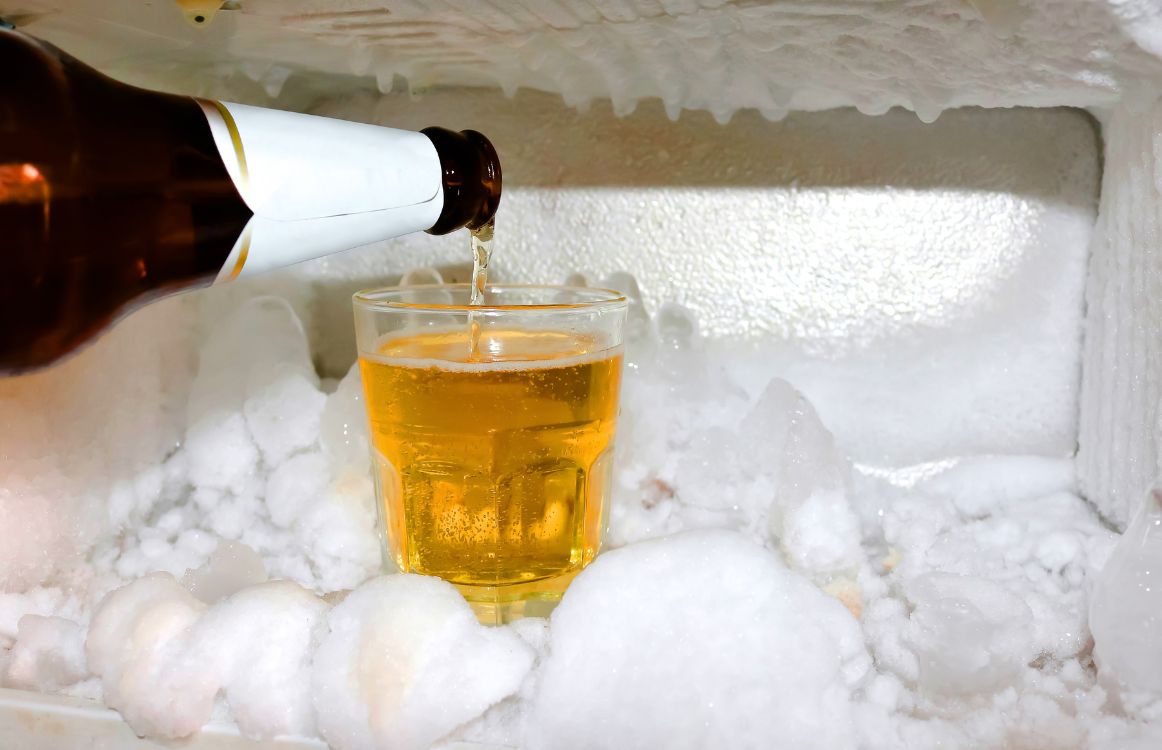
As always, you’ll want to set aside some of your beer to try yourself, so as you set the temperature of your beer fridge to store a few bottles of each batch, you can aim for between 35- and 45- degrees Fahrenheit.
Why so cold?
Because you can always allow the beer meant to be served at warmer temperatures to rise a bit before drinking it, but you can’t instantly cool down beer meant to be served on the colder end.
When in doubt, go colder.
Beer Serving Temperature Chart
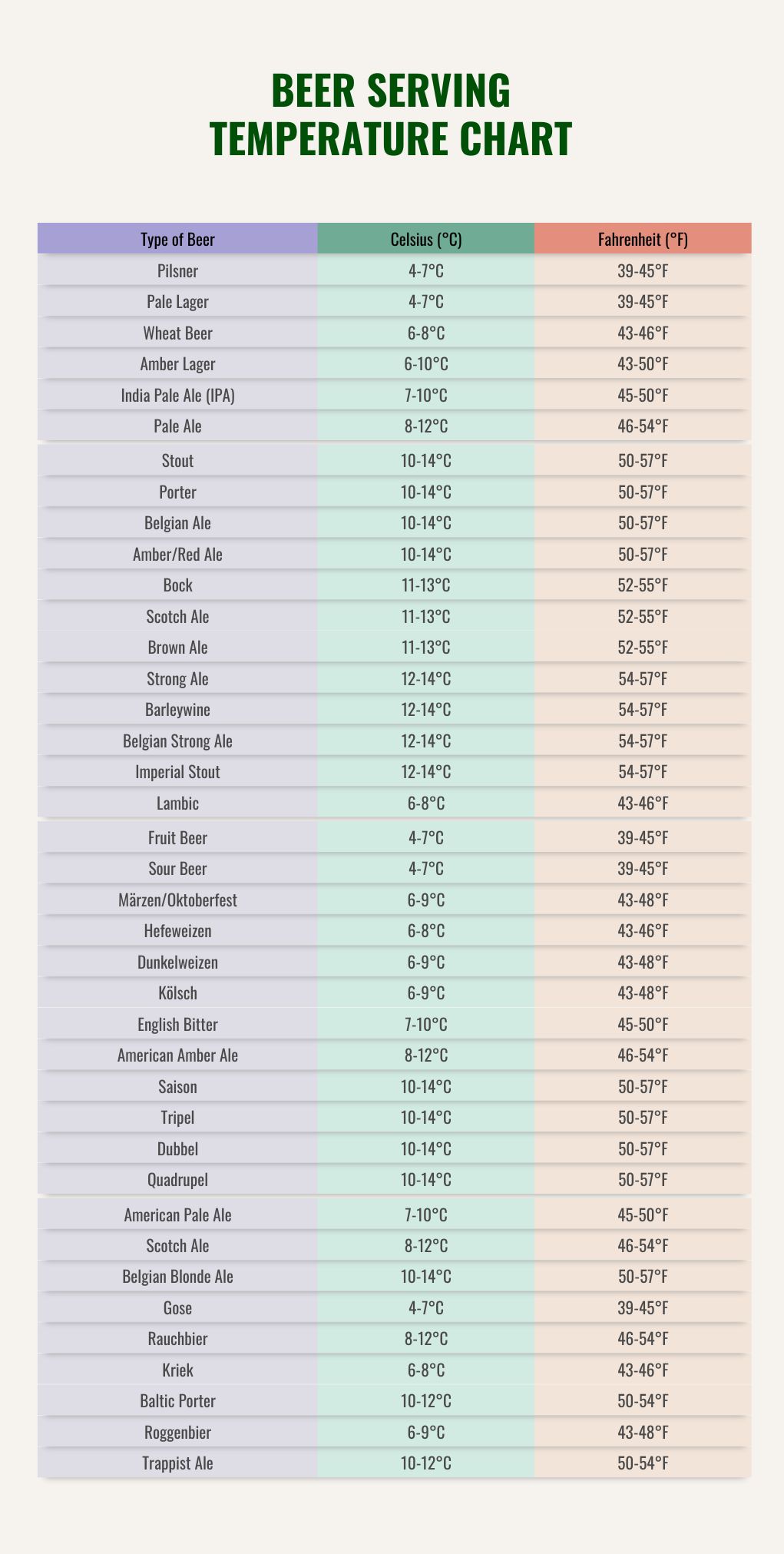
To sum up, serve your light beers colder, your dark beers warmer, your lagers colder, your ales warmer, your flavorless beers ice cold, and your strong beers verging on warm. You’ll find your way through each one, toy with degrees, and meet that perfect sweet spot along the way.
Cheers!
Are you still pitching fresh yeast every time? By reusing your yeast, you can save up to hundreds of thousands of dollars per year on just yeast alone!
Join the hundreds of brewers from all around the world using the Smartest Automated Yeast Cell Counter! Request a Free Demo Account today and experience firsthand how Oculyze can take your brewery to the next level!
Sources:
- https://www.homebrewersassociation.org/how-to-brew/proper-beer-serving-temperatures/
- https://www.craftbeering.com/beer-serving-temperature/
Stay on top on important fermentation insights – subscribe to our monthly newsletter and receive a hand-picked selection of our most relevant articles straight to your inbox.
Never miss a beat and get real time updates with a new article each workday by subscribing our social media channels.
Instagram | Facebook | Twitter | YouTube