Golden Ale Vs Lager: Similarities and Differences
On first glance, particularly for someone not deeply invested in telling beers apart, the whole golden ale vs lager issue seems a moot point. They can look almost identical.
In a world where we are used to seeing ales as darker, foamier, and richer while lagers are lighter, crisper, and more carbonated, ales and lagers seem an ocean apart from each other.
The reality is that there are only slight differences between the two, and the differences between a golden ale and a classic lager are even fewer.
To draw out these similarities and differences, let’s look at what these two beers are.
What Is Golden Ale?
It is helpful to note first that ale in general is the oldest form of beer between the two basic types of beer – ale and lager.
Ale was the first beer discovered and perfect by humans, some 10,000 years ago around the time of the agricultural revolution, when humans began to domesticate and settle down.
Ale is defined as beer made with yeast that ferments and flocculates on the top of the brew.
In early days, and for the thousands of years that followed, ales got progressively darker and stronger, so that by the time the 1800s arrived and Germany had fully mastered the art of the ale, this brew was known for its dark, rich, alcoholic characteristics.
That trend began to shift due to a few sociological and political changes around the world.
First, lager yeast was discovered in the 1400s, producing a colder, crisper, cleaner beer typically with a lower alcohol content and less “offensive” flavors. Some in the beer world would call it “boring.”
The most obvious difference between ale and lager yeasts is their fermentation style. Lager yeast ferments on the bottom of the brew and much colder temperatures.
And many would dispute the characterization of lager as boring.
Nonetheless, as prohibition laws were passed and more restrictions were implemented on how much alcohol beer could have, the lager was winning against the ale.
Then, in the late 1800s, European countries, including Germany and England, began brewing a lighter, crisper, less hoppy ale with a lower ABV, and the golden ale was born.
The golden ale really took off in the early 1900s when British Parliament passed the Defense of the Realm Act, which reduced the amount of alcohol a single beer could contain. You see, far too many British workers were getting drunk at lunchtime and returning to work either incapable of performing their duties or putting themselves and their coworkers in danger.
Imagine operating heavy factory machinery after a couple of beers with an ABV of 8% or 9%.
American
It is also a critical distinction to recognize that there are two types of golden ale.
The American golden ale was derived from those late 1800s ales brewed to compete with lagers, lower in alcohol, cleaner, and more neutral in flavoring.
It has taken off in the last few decades specifically as a major competitor to lagers in an effort to win over classic lager lovers.
The average, everyday Budweiser drinker prefers a beer with a low ABV, a clean, effervescent effect when cracked open, and flavors and aromas that are not overpowering.
The lager is quite often a session beer, meaning you can enjoy a few and not get inebriated in a single “session.”
The American golden ale offers those same options.
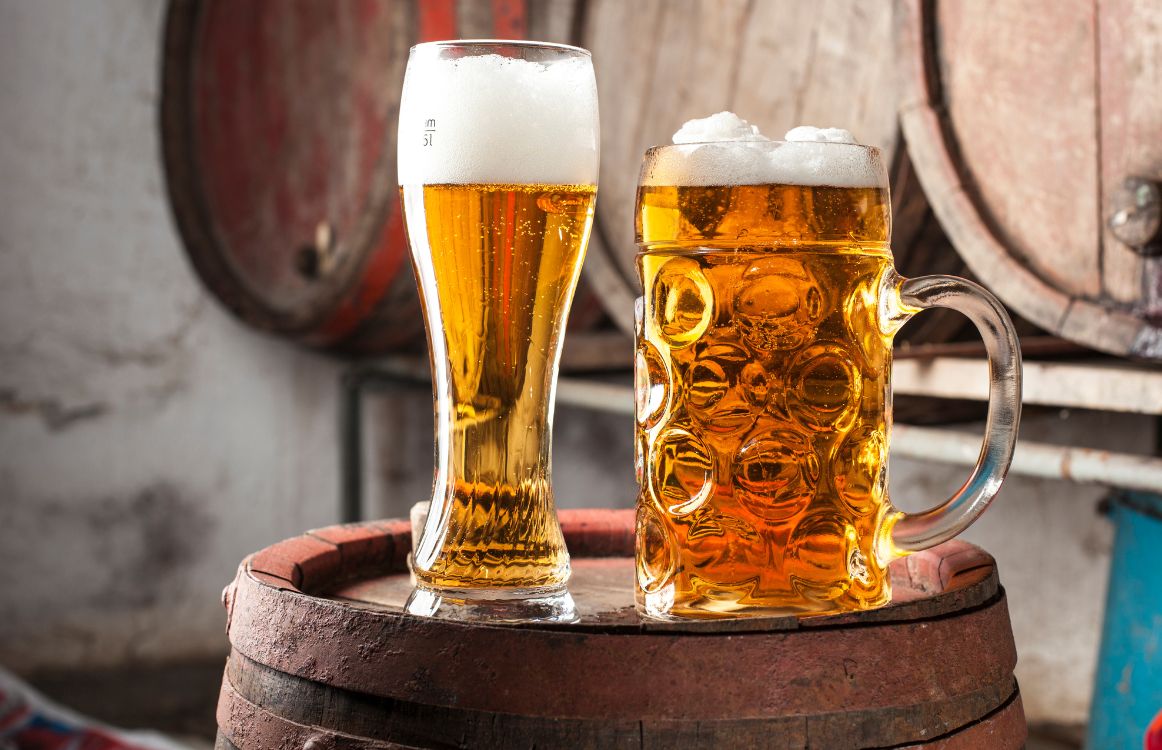
It is straw in color, it has no haze when it is cold, it is not super sweet, and it has notes of cereal grains.
It also will not be hoppy, so it will register low on the bitterness scale.
Belgian
A Belgian golden ale, in contrast, will have many of these same characteristics, but it will be much higher in alcohol, it will have fruity flavors and aromas, and the Belgian yeast used will produce an element of spiciness that blends well with the fruitiness.
Far from being neutral, the Belgian golden ale is complex and dramatic.
What Is Lager?
It is also critical to remember that when we discuss the comparison between a golden ale and a lager, we are discussing a specific niche subcategory to an entire category.
A golden ale is a type of ale, but a lager can be any beer brewed with lager yeast, or bottom fermenting yeast.
There can also be darker lagers, brewed with a more deeply toasted grain, particularly barley malt, and lagers with higher alcohol content.
So, comparing golden ale to lager is kind of like comparing one kind of apple to all categories of oranges.
Similarities
Still, when the question is asked about golden ale vs lager, it is generally asked about golden ale as compared, or contrasted, to the classic, light, crisp lager with a low ABV.
And those similarities are many.
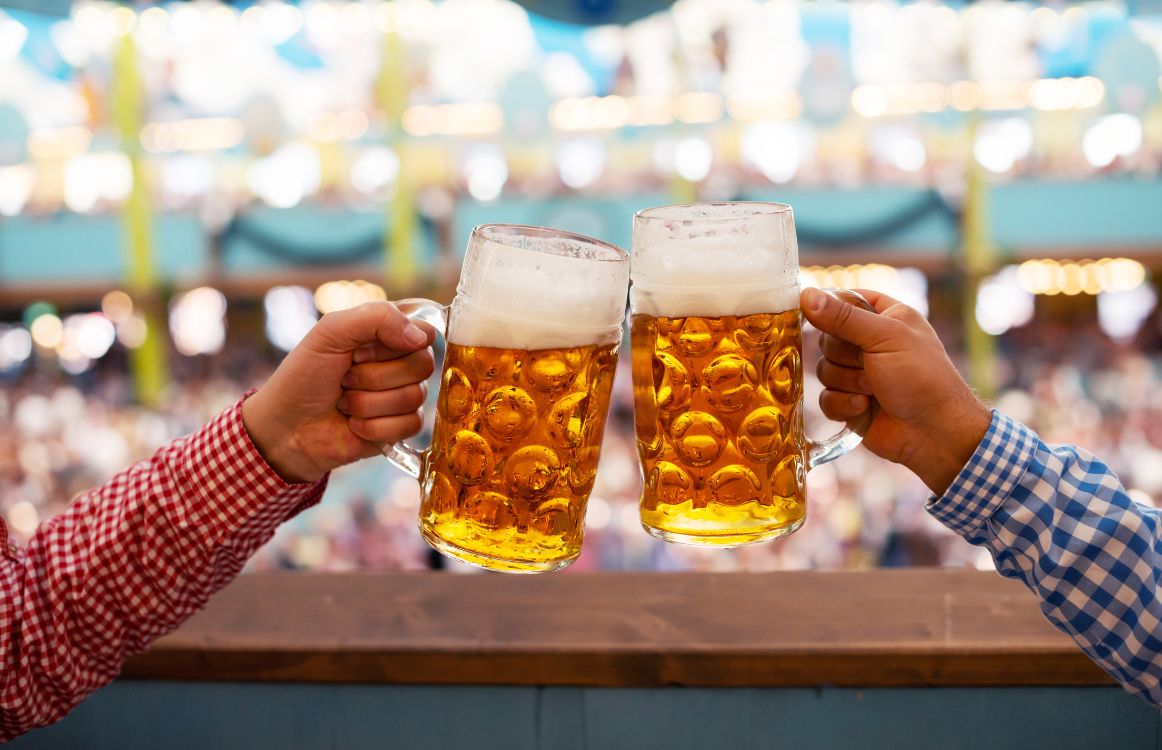
You can expect, in both beers, to see an ABV hovering between 4% and 5%, neutral flavors, light color, crispness, and low hops and bitterness.
Both beers are easy to drink, and you can enjoy more than a couple over an afternoon in the sun without worrying about getting overly full or falling down drunk.
Differences
The differences are much more subtle.
In terms of flavors, you can expect the golden ale to be lightly sweet, lightly malty, and have slight citrus notes.
Lagers, in contrast, can come across as nutty, bready, and even include notes of coffee and chocolate.
We also come to think of lager as more carbonated than ale, so expect more fizz and pop in your lager and more mellow carbonation in your ale.
Finally, lagers are often served colder because they ferment colder, whereas the flavors and aromas are highlighted best at higher temperatures.
In the end, it will really come down to preference, and, of course, experimentation.
Cheers!
Are you still pitching fresh yeast every time? By reusing your yeast, you can save up to hundreds of thousands of dollars per year on just yeast alone!
Join the hundreds of brewers from all around the world using the Smartest Automated Yeast Cell Counter! Request a Free Demo Account today and experience firsthand how Oculyze can take your brewery to the next level!
Sources:
- https://www.redshedbrewing.com/what-is-a-golden-ale/#:~:text=Known%20for%20its%20simplicity%2C%20the,are%20simple%20and%20straight%20forward
- https://www.craftbeer.com/styles/blonde-ale#:~:text=Rounded%20and%20smooth%2C%20it%20is,with%20lager%20or%20ale%20yeast
- https://www.beervanablog.com/beervana/2017/4/12/golden-ale-is-a-thing-why#:~:text=Invented%20by%20small%20breweries%20in,were%20neither%20fish%20nor%20fowl
- https://www.hopculture.com/what-exactly-is-a-golden-ale/
- https://www.thespruceeats.com/definition-of-lager-353244
Stay on top on important fermentation insights – subscribe to our monthly newsletter and receive a hand-picked selection of our most relevant articles straight to your inbox.
Never miss a beat and get real time updates with a new article each workday by subscribing our social media channels.
Instagram | Facebook | Twitter | YouTube