What Is High Gravity Beer?
If you’re still figuring out what gravity means in beer, it helps to have a thorough definition and explanation so that you may understand then what high gravity means in beer, which is what your beer enthusiasts really care about.
After all, gravity in beer will relate both to the ingredients you add to your brew as well as to the ultimate alcohol content at the end of fermentation.
What Is Gravity in Beer?
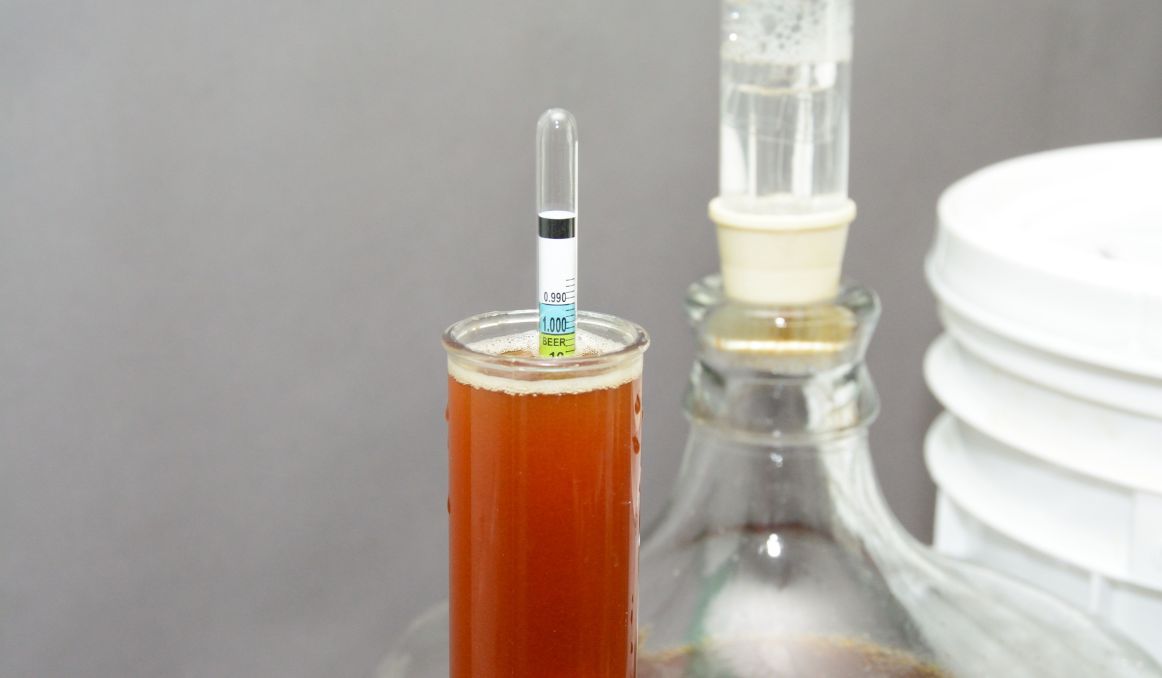
Far and away from the gravity we often talk about in polite conversations, the gravity that keeps us from flying off the face of the earth while it rotates rather rapidly on its axis, gravity in beer refers to dissolved solids.
You see, beer is the result of fermented barley malt, which is rich in fermentable sugars. To begin, the brewer takes a toasted grain and grinds it down to expose all those fermentable sugars and then brings the ground grain to a boil, a process called “mash-in.”
The boil essentially steeps all the sugars from the grain, pulling them into the water so that when yeast is added in the next step, it can feed on those sugars and convert them to alcohol through its waste process. This process is essentially fermentation – yeast consuming sugar and converting it to alcohol.
For context, the Standard Gravity (SG) of water is 1.0, meaning there are no dissolved solids in the water.
When you add the malted grain to the water and boil it, the gravity rises as all of those fermentable sugars are dissolved into the water.
Now, how high the gravity goes depends on how sugary that grain was, which can depend on the grain itself or even how much the grain was toasted, or malted.
Furthermore, a brewer can add extra fermentable sugars to the wort to make the gravity rise even higher. Adjuncts like coffee, chocolate, and even cane sugar itself can be added to increase the gravity of a beer.
All of these factors will raise what is called the Original Gravity (OG) of the beer.
The Original Gravity refers to how high the gravity has risen from the 1.0 of water to the point before boiling.
Basically, we want to know how high the gravity is before yeast is added.
Why do we want to know that?
Because as the yeast ferments the sugars and converts them to alcohol, the gravity will then drop down closer to 1.0 because alcohol is even less dense than water. Thus, as yeast consumes sugar and converts it to alcohol, the OG will drop.
The Final Gravity (FG) is the reading brewers will take and then compare to the OG to get a total ABV reading.
Essentially, (FG – OG) x 131.25 = ABV%
What Is High Gravity Beer?
To that end, a high gravity beer is a beer that had a high Original Gravity.
You cannot really tell from the Final Gravity of a beer how much alcohol there will be because you can’t know from that number alone how much fermentable sugars were present or how much of that sugar was consumed and converted by the yeast.
An Imperial Stout, which typically has quite a bit of alcohol, and a witbier might have the same Final Gravity but will have a dramatically different Original Gravity.
But an Imperial Stout will have an OG of, commonly, 1.080, which is pretty high, while a witbier will have an OG on average of 1.044. That’s a big difference.
Examples of high gravity beer include imperial stouts, whiskey ales, Belgian strong ales, barleywine, and barrel aged beer.
Thus, we can tell a lot about the richness of a beer, its texture and mouthfeel, and yes, its alcohol content by understanding its Original Gravity.
When we talk about high gravity beer, we are referring to a beer high in alcohol that is generally also referred to as a “big beer.”
Brewers seeking a high gravity beer work hard to front load the beer with a tremendous number of fermentable sugars, often adding several pounds of oats or other grain high in carbohydrates to the mash-in for the yeast to feast on.
Of course, there are dangers in creating a beer with an OG that is too high. The yeast might get stuck during fermentation, for example, as it may get overwhelmed by too much sugar to consume.
Good Yeast for High Gravity Beer

Thus, when aiming for a high gravity beer, you want to be sure you select a yeast with a high alcohol tolerance.
Too low of a tolerance will result in stressed out yeast, which will stagnate your fermentation and may even result in having to throw out a batch of otherwise perfectly good brew.
You also want to be sure that you pitch extra yeast.
Where a lower gravity beer will typically be fine with just one packet, a higher gravity beer may require two or even three packets of dry yeast to complete fermentation.
The best yeast strains on the market for high gravity beer right now are:
- Wyeast 3787: Liquid Beer Yeast: Trappist High Gravity
- Wyeast 1388: LIquid Beer Yeast: Belgian Strong Ale
- Mangrove Jack’s: Craft Series Beer Yeast / Workhorse / M10
- Wyeast 1728: Liquid Beer Yeast: Scottish Ale
- Red Star Pasteur Champagne Yeast
Remember to experiment with your yeast and wort in small batches first, taking accurate and consistent measurements along the way. Consider pitching your yeast with a yeast starter to ensure a healthy wort and adding yeast nutrient to keep your yeast thriving.
What If the Final Gravity Is Too High?
If your final gravity is too high, meaning you still have a lot of undissolved solids in your beer, it may simply be that your beer has not finished fermenting.
If you are concerned that your fermentation has stagnated, consider agitating your wort to get your yeast busy again or repitching fresh yeast with a yeast starter.
Cheers!
Yeast activity monitoring is essential for correct pitching and optimal fermentation! If you’re interested in finding out how you can use our technology to control fermentation and monitor your yeast, save work hours and improve the cost-efficiency of your business, drop us a line at [email protected] or check out the product pages (for beer or wine):
- Oculyze BB 2.0 (Better Brewing) Yeast Cell Counter App + Hardware
- Oculyze FW (Fermentation Wine) Yeast Cell Counter App + Hardware
Also, you can now get access to a fully functional demo account to test our Web App. Completely free of charge and with no commitment to purchase.
Sources:
- https://www.craftbeer.com/craft-beer-muses/high-gravity-beer-big-risk-bigger-reward
- https://www.craftbeer.com/craft-beer-muses/defining-gravity
Stay on top on important fermentation insights – subscribe to our monthly newsletter and receive a hand-picked selection of our most relevant articles straight to your inbox.
Never miss a beat and get real time updates with a new article each workday by subscribing our social media channels.
Instagram | Facebook | Twitter | YouTube